
Table of Contents
How to Stop Neck Pain from Laptop Use: Ergonomics, Physiology, and Modern Non-Surgical Relief
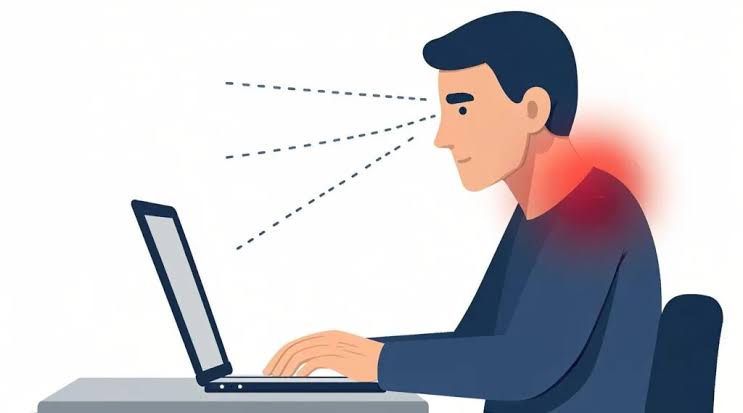
If you spend four or more hours a day looking down at a portable computer screen, learning how to stop neck pain from laptop use is essential to preventing long-term spinal wear. What begins as a subtle, end-of-day ache at the base of your skull can quickly turn into persistent stiffness, tension headaches, or sharp pain radiating down into your shoulders and arms.
In today’s hybrid work culture across tech hubs like Hyderabad, desk workers, software engineers, and remote professionals frequently hunch over laptop screens for extended hours. Because a laptop’s keyboard and screen are permanently connected, using one on a standard desk forces a physical trade-off: you either drop your head forward to see the display, or raise your shoulders to type comfortably.
Over time, this forward head posture—often referred to as “tech neck”—multiplies the gravitational load on your cervical spine. Left unmanaged, continuous mechanical stress can irritate delicate spinal joints, strain deep postural muscles, and compress cervical nerve roots. Understanding how screen position affects your spine is the key to stopping neck pain and preserving your spinal health.

What Is Laptop-Induced Neck Pain (Tech Neck)?
+--------------------------------------------------------------------------+
|                     HEAD POSTURE & SPINAL FORCES                         |
+--------------------------------------------------------------------------+
|                                                                          |
|       NEUTRAL POSTURE (0°)                FORWARD HEAD TILT (45°)        |
|                                                                          |
|             \   /                                   \   /                |
|             (o o)                                   (o o)                |
|               |                                       |                  |
|             // \\                                   //  \\               |
|            //   \\                                 //    \\              |
|           [Cervical]                              [Cervical]             |
|            [ Spine  ]                              [ Spine  ]            |
|               |                                       /                  |
|               |                                      /                   |
|          10–12 lbs Load                        49–60 lbs Load            |
|         (Balanced Force)                    (4x Muscle Strain)           |
|                                                                          |
|     Natural cervical curve;                Excessive strain on deep      |
|     cushioned disc pressure.               extensors & cervical joints.  |
+--------------------------------------------------------------------------+
Laptop-induced neck pain, commonly termed “tech neck,” is mechanical strain and tissue inflammation caused by holding the head in a sustained forward and downward angle while using portable computers. This posture forces cervical muscles, tendons, and facet joints to support up to four times the head’s normal physical weight.
When your head sits directly aligned over your shoulders, your cervical spine supports approximately 10 to 12 pounds of structural weight. However, when you tilt your head forward at a 45-degree angle to look down at a laptop screen resting flat on a table, the effective load on your neck structures surges to nearly 50 pounds.
How Is Interventional Pain Management Different from Standard Care?
When desk workers experience persistent neck pain, they are often caught between short-term topical relief and the intimidating prospect of surgical intervention. Interventional pain management fills the crucial gap between these extremes by offering precise, evidence-based diagnostic and therapeutic solutions.
Standard Conservative Care
Standard care usually involves over-the-counter anti-inflammatory tablets, muscle relaxants, pain balm applications, and basic stretching. While helpful for mild, temporary muscle fatigue, systemic medications circulate throughout the entire body rather than directly targeting the specific inflamed facet joint or compressed nerve root inside the neck. If prolonged laptop use has triggered localized nerve compression or joint arthritis, oral pills may only temporarily mask symptoms without resolving local inflammation.
Traditional Spine Surgery
Surgical options for the neck—such as anterior cervical discectomy and fusion (ACDF) or cervical disc replacement—involve operating directly near the spinal cord to remove disc material or fuse bone segments. Surgery is vital for cases involving severe structural instability or progressive spinal cord compression. However, open procedures require general anesthesia, extended recovery timelines, and carry inherent risks such as scar tissue formation or restricted neck mobility.
The Interventional Pain Specialty
An interventional pain doctor uses advanced, image-guided pinhole techniques to treat the exact anatomical origin of pain. Utilizing real-time fluoroscopy (X-ray guidance) or high-definition ultrasound, targeted therapies are delivered directly to irritated facet joints, inflamed epidural spaces, or tight muscle trigger points. This approach reduces tissue disruption, calms irritated nerves, and restores comfortable neck movement without open incisions or surgical downtime.
How to Fix Laptop Neck Pain: A Step-by-Step Ergonomic & Treatment Protocol
Reversing laptop-induced neck strain requires a systematic approach that combines immediate workstation modifications with targeted clinical care when pain persists.
1.Step 1: Elevate Your Laptop Screen to Eye Level: Aligning the top third of your display with your horizontal eye level.
Place your laptop on a dedicated laptop stand, a stable riser, or a stack of books. Position the screen so the top third of the display aligns directly with your natural, horizontal line of sight. This immediate change prevents you from tilting your head downward and reduces physical load on the cervical spine.
2.Step 2: Connect an External Keyboard and Mouse: Preventing shoulder rounding and upper back compensation.
Never type directly on an elevated laptop keyboard. Connect an external ergonomic keyboard and mouse placed flat on your desk surface. Position your elbows at a 90-degree angle close to your torso, keeping your shoulders relaxed and down rather than shrugged upward.
3.Step 3: Implement the 30-Minute Micro-Break Rule: Interrupting sustained static muscular contraction.
Set a soft timer to interrupt static posture every 30 minutes. Stand up, roll your shoulders backward, and perform gentle chin tucks (drawing your head straight back as if making a subtle double chin). Micro-breaks restore blood flow and oxygen to fatigued cervical extensor muscles.
4.Step 4: Specialized Interventional Pain Assessment: Pinpointing exact pain generators under precision imaging.
If neck stiffness, headaches, or arm numbness persist despite workstation corrections, consult a pain management specialist. Through clinical checks and cervical MRI correlation, an interventional specialist identifies whether your pain originates from cervical facet joints, disc bulges, or muscle spasm.
5.Step 5: Targeted Interventional Precision Treatment: Administering image-guided, non-surgical pain therapies.
When specific cervical joints or nerves are chronically inflamed, outpatient interventional procedures—such as fluoroscopy-guided cervical epidural steroid injections, medial branch blocks, or radiofrequency ablation (RFA)—can calm local inflammation and interrupt pain signals.
Types of Laptop-Related Neck Conditions and Targeted Interventional Procedures
Prolonged laptop use can affect several distinct anatomical structures within the cervical spine. Identifying your specific condition dictates the correct non-surgical treatment pathway.
1. Cervical Facet Joint Arthropathy
The small, stabilizing joints located at the back of each cervical vertebra can become compressed and inflamed during prolonged forward-head posture. This typically causes localized, dull neck aching that worsens when turning the head, alongside tension headaches felt at the base of the skull.
2. Cervical Radiculopathy (Pinched Nerve)
When forward posture combines with underlying disc bulges or bone spurs, the small exits (foramina) where nerve roots leave the spinal cord become narrowed. This can send sharp, burning pain, electric shocks, or “pins and needles” down the shoulder, arm, and fingers.
3. Myofascial Pain Syndrome & Trigger Points
Sustained muscular contraction can cause tight, painful knots (trigger points) to form in the trapezius, levator scapulae, and rhomboid muscles. These knots refer pain upward into the head or sideways across the shoulder blades.
Comparison of Non-Surgical Interventional Procedures
| Procedure Name | Target Anatomical Area | Clinical Mechanism | Typical Relief Duration | Ideal Patient Candidate |
| Cervical Epidural Steroid Injection (CESI) | Cervical epidural space near compressed nerve roots | Image-guided delivery of anti-inflammatory agents to reduce nerve swelling | 3 to 12 months | Patients with burning arm pain, numbness, or tingling caused by cervical disc herniation |
| Cervical Medial Branch Block / Facet Injections | Sensory medial branch nerves of cervical facet joints | Precision local anesthetic placement to confirm or calm joint pain | Immediate diagnostic confirmation; variable therapeutic relief | Patients with localized neck stiffness, limited turning range, and base-of-skull headaches |
| Cervical Radiofrequency Ablation (RFA) | Sensory nerves supplying arthritic facet joints | Uses gentle thermal energy to temporarily interrupt pain signals from chronic joint wear | 6 to 18 months | Patients with confirmed, long-standing cervical facet joint pain unresponsive to physiotherapy |
| Trigger Point Injections (TPI) / Dry Needling | Myofascial knots in upper trapezius & levator scapulae | Targeted needle insertion with local anesthetic to release chronic muscle spasms | Several weeks to months (when combined with physical therapy) | Desk workers with painful muscle knots, shoulder tightness, and posture-induced muscle fatigue |

Can I Avoid Neck Surgery with Non-Surgical Interventional Treatment?
A primary concern for IT professionals and remote workers experiencing severe cervical pain is whether major surgery is unavoidable.
According to clinical guidelines established by the International Association for the Study of Pain (IASP) and the Indian Society for Study of Pain (ISSP), the vast majority of neck pain cases linked to postural strain and mild-to-moderate disc changes respond well to non-surgical care. By combining ergonomic adjustments, structured physiotherapy, and targeted interventional pain procedures, most patients achieve lasting pain reduction without undergoing open spine surgery.
Who Is Suitable for Interventional Pain Treatment?
Understanding whether you are a candidate for modern non-surgical pain relief helps clarify your pathway toward recovery.
You May Be a Candidate If:
- You experience persistent neck pain, upper back tightness, or daily tension headaches associated with desk or laptop work.
- You feel radiating aching, tingling, or numbness traveling into your shoulder, arm, or fingers.
- Your symptoms have persisted for more than 4 to 6 weeks despite rest, massage, or basic ergonomic changes.
- You want to avoid open neck surgery or reliance on daily oral pain medications.
- An MRI or X-ray shows cervical disc bulges, facet joint degeneration, or nerve exit narrowing that aligns with your physical symptoms.
What to Expect: Before, During, and After Treatment
Feeling cautious before undergoing a spine procedure is completely understandable. Modern interventional pain treatments prioritize patient safety, comfort, and minimal disruption to daily life.
Before the Procedure
Your specialist conducts a comprehensive physical examination, evaluates your cervical movement ranges, and carefully reviews your MRI or CT imaging. You will receive clear, straightforward guidance on preparing for your outpatient procedure.
During the Procedure
- Comfort & Precision: Procedures are performed in an outpatient setting using local anesthesia to ensure complete comfort.
- Real-Time Guidance: High-precision fluoroscopy (X-ray) or ultrasound imaging confirms exact needle placement to the millimeter before any therapeutic agent is delivered.
- Duration: Most targeted cervical injections take only 15 to 25 minutes to complete.
After the Procedure
- Immediate Recovery: You rest in a comfortable observation area for 30 to 45 minutes before returning home the same day.
- Downtime: Most patients can resume light daily tasks and remote work within 24 to 48 hours.
- Results Timeline: Targeted anti-inflammatory medications generally begin providing relief within 3 to 7 days, allowing you to participate more comfortably in physical therapy and daily work activities.
When Should You Consider Seeing an Interventional Pain Specialist?
If you have been managing chronic neck strain for more than 6 weeks with limited relief from medication or physiotherapy, a consultation with a fellowship-trained interventional pain specialist is the logical next step.
Dr. P. Purohithi at Apollo Hospital, Kondapur, Hyderabad, specializes in precisely diagnosing and treating the source of your pain using image-guided, minimally invasive techniques—without defaulting to surgery. Holding prestigious international qualifications including FIPM (Fellowship in Interventional Pain Management) and IDRA, Dr. Purohithi delivers expert clinical care at Meraki Pain Management Center. By correlating your physical symptoms directly with advanced spine imaging, Dr. Purohithi develops personalized treatment plans focused on restoring neck mobility and long-term working comfort.
Frequently Asked Questions
Why does using a laptop cause more neck pain than a desktop computer?
Laptops feature an attached screen and keyboard, which forces you to either tilt your head downward or raise your arms awkwardly. Desktop setups allow you to position the monitor independently at eye level while keeping your hands relaxed at desk height.
How do I know if I need a pain management specialist?
If your neck or arm pain persists for longer than 4 to 6 weeks, interferes with your sleep or work productivity, or fails to improve with rest and basic stretching, consulting a pain management specialist Hyderabad is recommended for a precise anatomical evaluation.
How long does radiofrequency ablation last for chronic neck pain?
Cervical radiofrequency ablation (RFA) for facet joint pain typically provides noticeable relief lasting between 6 to 18 months. Because the procedure does not damage structural bone or muscle tissue, it can be safely repeated if nerve fibers gradually regenerate over time.
Are cervical nerve blocks or epidural injections painful?
Discomfort during a fluoroscopy-guided cervical procedure is minimal. The skin and deeper tissues are thoroughly numbed with local anesthesia, and real-time imaging allows the procedure to be completed smoothly and quickly.
How much does a nerve block cost in Hyderabad?
The cost of an image-guided cervical nerve block or epidural procedure varies depending on clinical complexity, the specific spinal levels involved, and hospital facility guidelines. A consultation at an established pain clinic Hyderabad provides clear cost information tailored to your individual treatment plan.
Can targeted pain procedures help me avoid neck surgery?
Yes. By reducing local nerve swelling and joint inflammation using image-guided techniques, targeted interventional procedures allow many patients with cervical disc bulges or joint arthritis to recover comfortably without undergoing open neck surgery.
Can I consult Dr. P. Purohithi at Apollo Hospital Kondapur?
Yes. Dr. P. Purohithi evaluates patients and performs advanced, outpatient non-surgical procedures at Meraki Pain Management Center, located within Apollo Hospital, Kondapur, Hyderabad.
Reclaim Your Working Comfort and Neck Health
Living with daily neck pain, tension headaches, and shoulder strain should not be an accepted cost of working on a computer. By combining smart workstation ergonomics with modern non-surgical pain treatments, you can protect your spine and work comfortably without pain.
If you are looking for an expert opinion on managing neck pain in Hyderabad, Dr. P. Purohithi at Meraki Pain Management Center (Apollo Hospital, Kondapur) offers comprehensive diagnostic evaluations and individualized non-surgical care.



Leave a Comment