
Table of Contents
Why Does My Back Hurt More in the Morning? Understanding the Causes and Modern Non-Surgical Relief
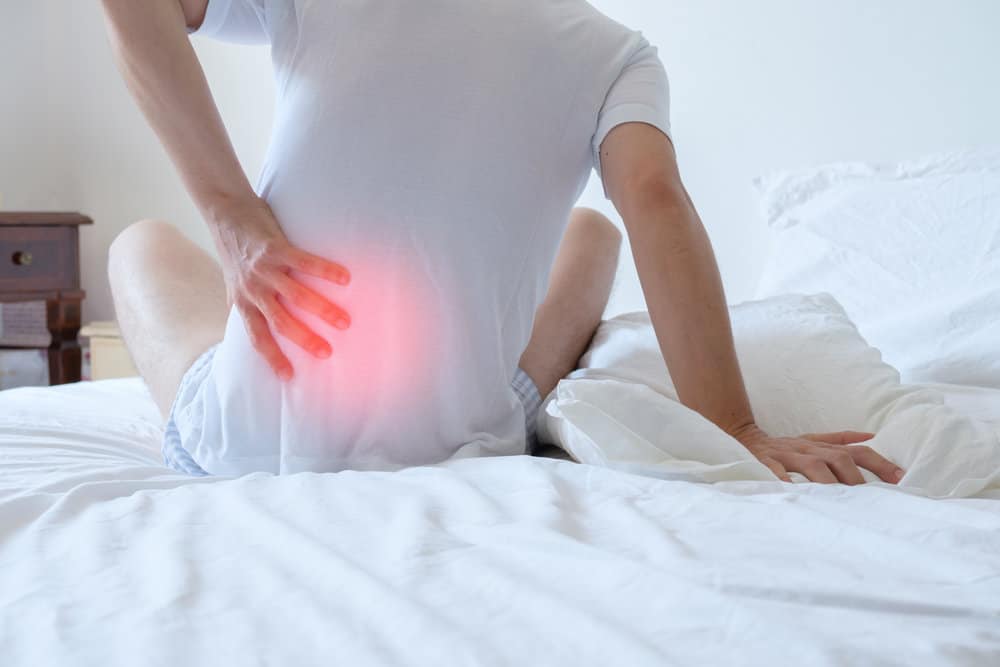
If you find yourself asking, “Why does my back hurt more in the morning?“ you are not alone. Waking up with a stiff, aching lower back that takes 20 to 30 minutes to “warm up” is one of the most frequent complaints brought to pain specialists. Instead of feeling refreshed, your first steps out of bed feel tight, painful, and exhausting.
Morning back pain is a distinct physiological pattern, not a random coincidence. While many people attribute early morning stiffness to a bad mattress or a poor sleeping position, the primary cause often lies deeper within the structural and inflammatory mechanics of your spine.
Understanding why your spine feels tighter at sunrise is the first step toward finding lasting, long-term relief. Modern pain medicine offers targeted, minimally invasive pathways to restore your mornings without relying on lifelong oral medications or jumping directly into major surgery.

What Is Morning Back Stiffness and Pain?
Direct Answer: Morning back pain is localized pain or stiffness in the lumbar spine upon waking, primarily driven by nocturnal fluid reabsorption into spinal discs (disc rehydration), nocturnal joint inflammation, and decreased tissue blood flow during prolonged immobility. It typically eases gradually as movement restores spinal fluid circulation and muscle warmth.
When you sleep, your spinal discs absorb fluid like sponges because gravity is no longer compressing them. This natural hydration process causes the discs to expand overnight, temporarily increasing internal disc pressure. When you sit up or bend forward first thing in the morning, those swollen discs press harder against sensitive surrounding nerves and spinal joints, triggering sharp pain or deep aching stiffness.
+-----------------------------------------------------------------------+
|                       Overnight Spinal Immobility                      |
|                                                                       |
|  1. Discs reabsorb fluid and expand (increasing internal pressure)    |
|  2. Blood flow to surrounding muscles and joint capsules slows        |
|  3. Inflammatory chemicals accumulate in facet and SI joints          |
+-----------------------------------+-----------------------------------+
                                    |
                                    v
+-----------------------------------------------------------------------+
|                      Waking Up & First Movements                      |
|                                                                       |
|  1. Swollen discs compress adjacent nerve roots or joint capsules      |
|  2. Stiffened muscles reflexively spasm to protect the spine          |
|  3. Sharp pain or tight, restrictive aching occurs upon standing      |
+-----------------------------------+-----------------------------------+
                                    |
                                    v
+-----------------------------------------------------------------------+
|                     Daytime Activity & Movement                       |
|                                                                       |
|  1. Gravity gradually compresses discs back to daytime height         |
|  2. Increased circulation flushes out inflammatory markers            |
|  3. Pain eases temporarily (until the cycle repeats overnight)        |
+-----------------------------------------------------------------------+
How Is Interventional Pain Management Different from Standard Treatments?
When patients seek help for morning back pain, they are often directed toward two extremes: conservative management or open surgery. Interventional pain management occupies a crucial, specialized space between these two approaches.
Standard Conservative Care
Basic conservative care typically involves oral anti-inflammatory drugs, muscle relaxants, topical gels, and general physiotherapy. While these approaches are useful for minor muscle strains, they work globally rather than targeting the specific tissue generating your pain. If a bulging disc or arthritic facet joint is inflaming a nerve every night, oral pills may only temporarily mask the symptoms.
Traditional Spine Surgery
Open spine surgery focuses on structural alteration—physically cutting away bone, removing disc material, or fusing spinal segments together. While essential for structural emergencies (such as progressive paralysis or severe spinal instability), surgery carries higher risks, significant tissue trauma, and extended recovery timelines.
The Interventional Pain Specialty
An interventional pain doctor uses precise, image-guided, pinhole techniques to treat the exact anatomical source of your morning pain without open incisions. By utilizing real-time X-ray (fluoroscopy) or ultrasound, medications or thermal energy are delivered directly to the inflamed spinal joint or nerve root. This approach resolves the underlying inflammation while preserving your natural spinal structure.
How Does a Comprehensive Evaluation and Treatment Process Work?
Addressing persistent morning back pain requires a structured, step-by-step clinical approach to pinpoint the exact pain generator before initiating therapy.
Step 1: In-Depth Diagnostic Mapping
Clinical correlation between sleep patterns, physical exams, and imaging
A specialized assessment begins by correlating your specific morning symptoms with physical movement tests and advanced imaging, such as an MRI or CT scan. Because an MRI can show incidental wear and tear, an interventional pain specialist verifies whether the imaged abnormality actually matches your morning pain location.
Step 2: Precision Diagnostic Blocks
Pinpointing the precise joint, disc, or nerve root
To confirm the exact pain generator, a tiny amount of local anesthetic is placed directly target-adjacent to a suspected joint or nerve root under fluoroscopic guidance. Immediate relief during morning-like movement patterns can help confirm the precise origin of your discomfort.
Step 3: Targeted Interventional Therapy
Outpatient, pinhole procedures designed for targeted relief
Once the pain source has been identified, targeted treatments can be applied. Options may include lumbar epidural steroid injections to calm irritated or swollen nerve roots, or radiofrequency ablation (RFA) to interrupt pain signals from chronically painful facet joints.
Step 4: Active Functional Rehabilitation
Restoring deep spinal stabilizers and core mechanics
With acute morning pain reduced, targeted physical therapy can focus on strengthening the deep core muscles, including the transversus abdominis and multifidus. These muscles provide natural structural support to the spine and may help reduce mechanical stress during sleep and daily movement.
Step 5: Sleep Ergonomics & Lifestyle Modification
Optimizing sleep posture, mattresses, and movement habits
The final phase focuses on practical sleep adjustments, including appropriate pillow placement, supportive mattress selection, and gentle morning movement routines. These changes can help reduce mechanical strain and stiffness that may contribute to morning back pain.
Common Causes of Morning Back Pain and Their Treatment Options
Morning back pain can stem from several underlying spinal conditions. Categorizing these causes helps guide the selection of appropriate, non-surgical treatment options.
1. Lumbar Facet Joint Osteoarthritis
The facet joints connect your spinal vertebrae and allow for flexible motion. Over time, cartilage wear can cause these joints to become arthritic. During overnight immobility, inflammatory fluid accumulates inside the joint capsules, resulting in severe stiffness and aching during the first 15 to 30 minutes after waking.
2. Degenerative Disc Disease (DDD) & Bulging Discs
As spinal discs age, they lose baseline moisture but still absorb fluid overnight. A degenerated or bulging disc expands in the sleeping position, placing mechanical pressure on nearby spinal nerves. Upon standing, this pressure triggers sharp lower back or radiating leg pain (sciatica).
3. Sacroiliac (SI) Joint Dysfunction
The SI joints connect the base of your spine to your pelvis. Sleeping on your side without proper leg support can twist the pelvis, straining these joints overnight. Waking up with lower back and hip pain that makes standing upright difficult is a hallmark sign of SI joint irritation.

4. Ankylosing Spondylitis & Inflammatory Arthropathies
Ankylosing spondylitis is an autoimmune condition characterized by chronic spinal joint inflammation. Unlike mechanical back pain, inflammatory back pain worsens noticeably with rest, causes intense morning stiffness lasting longer than 45 minutes, and improves significantly with physical movement.
Comparison of Targeted Interventional Procedures
| Treatment Option | Primary Anatomical Target | Procedure Mechanism | Typical Relief Duration | Ideal Candidate |
| Lumbar Epidural Steroid Injection (LESI) | Inflamed spinal nerve roots / Epidural space | Image-guided delivery of anti-inflammatory medication to calm irritated nerves | Several months to over a year | Patients with disc bulges or sciatica that flares up in the morning |
| Facet Joint Radiofrequency Ablation (RFA) | Medial branch nerves of the facet joints | Precise thermal energy temporarily halts pain signal transmission | 6 to 18 months | Patients with arthritic facet joints causing morning lower back stiffness |
| Sacroiliac (SI) Joint Injection / RFA | Sacroiliac joint capsule and sensory nerves | Targeted anti-inflammatory injection or nerve ablation | 3 to 12+ months | Patients with lower back, buttock, and hip pain exacerbated by sleeping posture |
| Platelet-Rich Plasma (PRP) Therapy | Strained spinal ligaments and joint capsules | Concentrated autologous growth factors injected to support tissue repair | Long-term regenerative response | Patients with chronic ligamentous instability or early joint wear |
Who Is Suitable for Interventional Pain Treatment?
You do not have to live with severe morning back stiffness, nor do you need to wait until surgery becomes the only remaining option.
Ideal Candidate Criteria
- You experience lower back pain or stiffness every morning that interferes with your daily routine.
- Your pain has persisted for more than 4 to 6 weeks despite rest, stretching, or over-the-counter medications.
- You wish to avoid long-term reliance on painkillers or anti-inflammatory drugs.
- Your MRI or X-ray shows disc degeneration, bulging discs, or facet joint arthritis.
- You have been told you are not a candidate for surgery, or you wish to actively explore non-surgical alternatives first.
What to Expect: Before, During, and After Treatment
Uncertainty about medical procedures is completely natural. Modern interventional pain treatments are designed to be minimally invasive, highly precise, and reassuringly straightforward.
Before the Procedure
Your physician will review your medical history, perform a physical examination, and examine your MRI scans. You will receive clear instructions regarding any temporary adjustments to blood-thinning medications or daily routines.
During the Procedure
- Comfort & Safety: Procedures are performed on an outpatient basis under local anesthesia, ensuring you remain comfortable throughout.
- Image Guidance: The physician utilizes real-time fluoroscopy (X-ray guidance) to navigate micro-needles precisely to the affected area.
- Speed: Most procedures take between 15 to 30 minutes.
After the Procedure
- Immediate Recovery: You will spend 30 to 45 minutes in a comfortable recovery lounge before heading home the same day.
- Return to Activity: Most patients resume light daily activities within 24 to 48 hours.
- Results Timeline: Steroid-based anti-inflammatory injections typically begin taking full effect within 3 to 7 days, while radiofrequency procedures provide progressive relief over 2 to 3 weeks as localized inflammation settles.
When Should You Consider Seeing an Interventional Pain Specialist?
If you have been managing chronic morning back pain for more than 6 weeks with limited relief from medication or general physiotherapy, consulting a fellowship-trained interventional pain specialist is a logical next step.
At Meraki Pain Management Center, located within Apollo Hospital, Kondapur, Hyderabad, Dr. P. Purohithi specializes in diagnosing and treating the precise sources of morning back pain using advanced, image-guided, non-surgical techniques. Holding advanced international qualifications, including FIPM (Fellowship in Interventional Pain Management) and IDRA, Dr. Purohithi focuses on identifying the root cause of your pain to restore your morning mobility—without defaulting to major surgery.
Frequently Asked Questions
Can a bad mattress be the sole cause of morning back pain?
A worn-out or unsupportive mattress can exacerbate back pain by failing to keep your spine in a neutral position overnight. However, if severe morning pain or stiffness persists despite changing your mattress, an underlying spinal condition—such as disc degeneration or facet joint arthritis—is usually present.
How do I know if my morning back pain is serious?
While most morning back pain stems from mechanical or inflammatory spinal issues, you should seek immediate evaluation if your pain is accompanied by “red flag” symptoms: unexplained weight loss, fever, numbness in the groin area, or a sudden loss of bowel or bladder control.
Is radiofrequency ablation safe for morning back stiffness?
Yes, facet joint radiofrequency ablation (RFA) is a well-established, safe, and minimally invasive outpatient procedure. Performed under real-time image guidance by a trained pain management specialist, it carries a low risk profile and offers significant, long-lasting relief from arthritic joint pain.
How long does it take to recover from a lumbar epidural injection?
Recovery is minimal. Because it is a pinhole procedure performed under local anesthesia, most patients can return to normal, light daily activities within 24 to 48 hours after the treatment.
How much does an interventional pain consultation cost in Hyderabad?
Consultation fees and procedure costs depend on clinical complexity and the specific image-guided treatment required. Consulting a dedicated pain clinic Hyderabad like Meraki Pain Management Center ensures transparent discussions regarding your diagnostic and treatment path.
Can PRP therapy help with chronic morning lower back pain?
Platelet-Rich Plasma (PRP) therapy can be beneficial for patients whose morning pain is linked to chronic ligament strain, sacroiliac joint instability, or early facet joint arthropathy. Autologous growth factors support natural tissue healing and joint stabilization over time.
How can I consult Dr. P. Purohithi at Apollo Hospital Kondapur?
You can schedule an evaluation with Dr. P. Purohithi at Meraki Pain Management Center, situated inside Apollo Hospital, Kondapur, Hyderabad. A detailed diagnostic review of your medical history and imaging will be conducted to formulate a personalized, non-surgical care plan.
Start Your Mornings Without Pain
Waking up with back pain does not have to be your daily reality. Modern interventional pain medicine provides targeted, effective solutions that address the root cause of morning stiffness without open surgery or long-term medication use.
If you are seeking expert evaluation for morning back pain in Hyderabad, Dr. P. Purohithi at Meraki Pain Management Center (Apollo Hospital, Kondapur) offers comprehensive diagnostic assessments and advanced non-surgical therapies tailored to your lifestyle.




Leave a Comment