
Table of Contents
What Is an Ultrasound-Guided Nerve Block? A Patient’s Guide to Precision Pain Relief
Understanding what is an ultrasound-guided nerve block begins with recognizing how modern imaging technology has transformed the field of non-surgical pain medicine. When persistent joint pain, nerve compression, or post-traumatic stiffness interferes with your ability to sleep, work, or move comfortably, finding a safe, accurate method to stop pain at its source becomes an urgent priority.
For thousands of patients across Hyderabad living with conditions like sciatica, occipital headaches, frozen shoulder, or complex regional pain, traditional treatment options often feel limited. Taking daily oral painkillers can cause unwanted side effects like stomach irritation and brain fog, while major open surgery may feel unnecessarily invasive or risky.
An ultrasound-guided nerve block offers a sophisticated middle path. By providing high-resolution, real-time visual control during procedural delivery, this outpatient technique allows a specialist to locate irritated nerves and surrounding blood vessels with sub-millimeter accuracy. Exploring what is an ultrasound-guided nerve block opens the door to targeted non-surgical pain relief that quiets hyperactive nerve signals and restores physical function without long hospital stays.
What Is an Ultrasound-Guided Nerve Block?
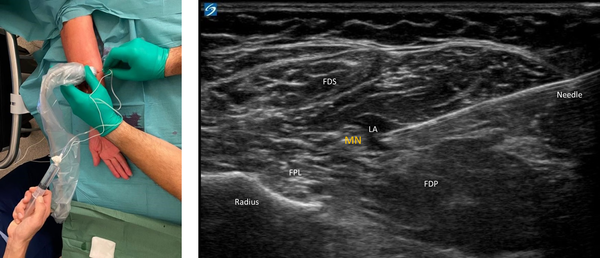
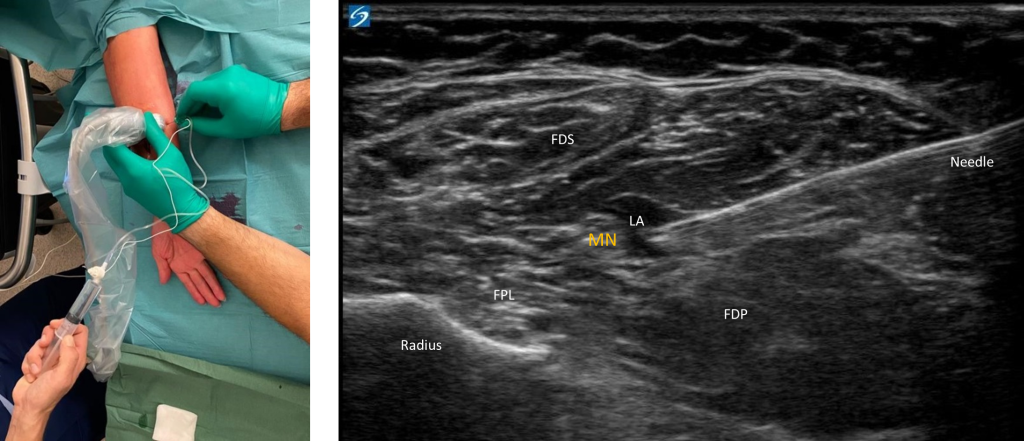
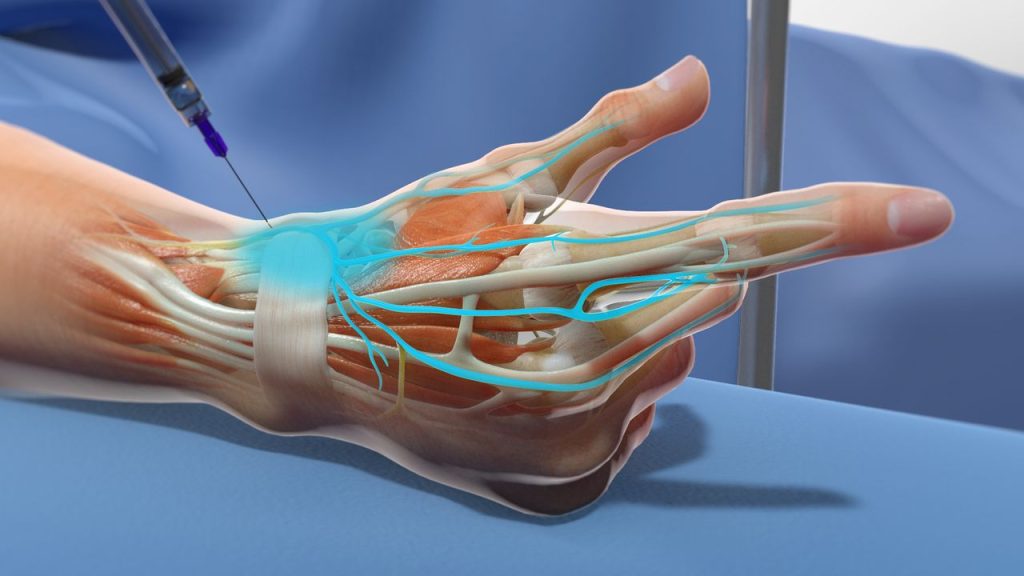
An ultrasound-guided nerve block is an outpatient interventional pain procedure where high-frequency ultrasound waves are used to visualize nerves, soft tissues, and blood vessels in real time. This allows a specialist to guide a fine needle precisely and deliver local anesthetics or anti-inflammatory agents adjacent to specific target nerves.
Ultrasound-Guided Nerve Block: How It Works
An ultrasound-guided nerve block uses real-time imaging to help a trained clinician identify the target nerve and nearby structures before delivering medication to the intended area.
Step-by-Step Mechanism
1. High-Frequency Ultrasound Imaging
The clinician uses an ultrasound probe to visualize soft tissues, nerves, and nearby blood vessels in real time.
2. Target Nerve Identification
The target nerve and surrounding anatomy are mapped to help plan a safe needle path and reduce the risk of unintended injury.
3. Image-Guided Medication Delivery
A needle is advanced under ultrasound guidance, and medication—typically a local anesthetic, sometimes with an additional medication when appropriate—is delivered near the target nerve.
4. Reduced Pain Signaling
The local anesthetic temporarily blocks nerve signal transmission, reducing pain sensation in the targeted area. The duration of relief depends on the medication, nerve, and underlying condition.
According to clinical research supported by the International Association for the Study of Pain (IASP) and the Indian Society for the Study of Pain (ISSP), using dynamic musculoskeletal ultrasound during nerve blocks significantly increases procedural safety and accuracy compared to older “blind” landmark-based injection methods.
How Is Interventional Pain Management Different from Standard Care?
Understanding what is an ultrasound-guided nerve block requires evaluating how interventional pain medicine provides distinct advantages over routine pharmacological care and traditional open surgery.
Traditional Oral Pharmacological Care
Standard primary care for nerve and joint pain frequently relies on oral non-steroidal anti-inflammatory drugs (NSAIDs), muscle relaxants, and neuropathic pain medications. While oral pills can help manage mild acute flare-ups, taking them daily over extended periods carries risks of gastric ulcers, kidney stress, and elevated blood pressure. Crucially, oral pills diffuse systemically throughout your entire body rather than concentrating directly on the single irritated nerve root or joint capsule driving your pain.
Traditional Blind or Surgical Options
Before the widespread adoption of real-time imaging, injections relied on physical palpation of anatomical landmarks (“blind injections”), which carried higher rates of misplaced medication or accidental blood vessel contact. Conversely, when conservative pills fail, patients are sometimes told that major surgical operations are their only remaining choice. While open surgery is critical for severe progressive structural emergencies, major operations involve general anesthesia, tissue disruption, hospital stays, and lengthy recovery timelines.
The Interventional Specialty Approach
An interventional pain doctor utilizes live dynamic imaging—specifically high-resolution musculoskeletal ultrasound—to transform pain management into a visual science. By visualizing the target nerve, surrounding muscles, and vascular structures in real time, specialists deliver concentrated therapeutic agents directly to the target tissue. This precise approach provides effective, non-surgical relief with minimal procedural downtime and zero surgical incisions.
How an Ultrasound-Guided Nerve Block Works: Step-by-Step
When persistent nerve or joint pain resists basic conservative care, interventional pain specialists use a structured, safety-first clinical workflow to perform an ultrasound-guided procedure.
1.Step 1: Clinical Assessment & Ultrasound Scanning: Mapping anatomical structures under high-definition ultrasound.
The patient rests comfortably in an outpatient procedure suite. High-frequency ultrasound transducers are placed on the skin over the target area to map the exact depth, course, and surroundings of the irritated nerve.
2.Step 2: Skin Sterilization & Local Numbing: Ensuring complete patient comfort throughout the procedure.
The skin over the target area is thoroughly sterilized using antiseptic solutions. A micro-fine needle is used to apply a local anesthetic to the superficial skin layers, ensuring complete comfort during needle insertion.
3.Step 3: Real-Time Needle Advancement: Sub-millimeter needle tracking under continuous live visualization.
Using continuous live ultrasound visualization, the specialist advances a specialized needle in real time, keeping the needle tip clearly visible as it approaches the target nerve sheath while avoiding nearby blood vessels.
4.Step 4: Precision Therapeutic Medication Delivery: Interrupting hyperactive nerve signaling pathways safely.
Once the needle tip is confirmed adjacent to the nerve capsule, a small dose of local anesthetic (and optional anti-inflammatory agent) is injected. The clinician observes the medication spread around the nerve sheath on the live monitor.
5.Step 5: Post-Procedure Recovery & Rehabilitation Guidance: Immediate pain assessment and outpatient discharge roadmap.
Following a brief 15-to-30-minute observation period in a recovery lounge, the patient experiences rapid pain reduction and returns home the same day with a tailored physical therapy plan to rebuild strength.
Types of Ultrasound-Guided Nerve Blocks Compared
Understanding what is an ultrasound-guided nerve block involves matching your specific pain condition with the appropriate peripheral or regional nerve block procedure.
Procedure Comparison Table
| Nerve Block Category | Target Anatomical Nerve | Common Medical Indications | Primary Clinical Benefit |
| Occipital Nerve Block | Greater and lesser occipital nerves at the base of the skull | Cervicogenic headaches, occipital neuralgia, tension-type head pain | Rapidly desensitizes head and neck pain signaling |
| Suprascapular Nerve Block | Suprascapular nerve along the upper scapular notch | Frozen shoulder, rotator cuff arthropathy, post-trauma shoulder pain | Reduces deep shoulder joint pain to allow physical therapy |
| Genicular Nerve Block | Superior and inferior genicular nerve branches around the knee | Moderate to severe knee osteoarthritis, persistent post-surgical pain | Provides targeted non-surgical relief for chronic knee pain |
| Stellate Ganglion Block | Cervical sympathetic chain in the lower anterior neck | Complex Regional Pain Syndrome (CRPS), vascular pain disorders | Normalizes sympathetic nerve activity and improves circulation |
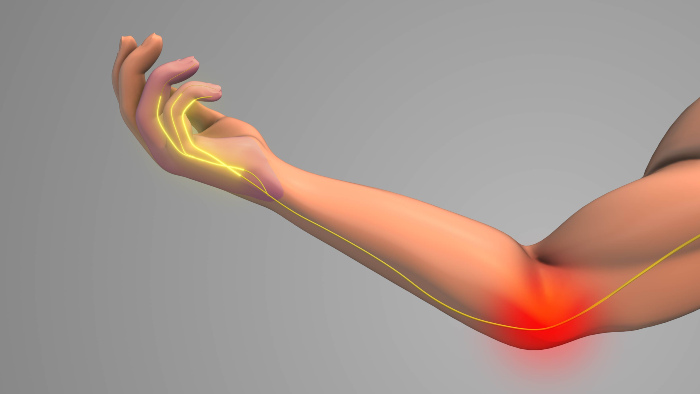
| Peripheral Nerve Sheath Injections | Median, ulnar, radial, or lateral femoral cutaneous nerves | Carpal tunnel syndrome, cubital tunnel syndrome, meralgia paresthetica | Reduces local nerve compression inflammation and numbness |
Who Is Suitable for Ultrasound-Guided Nerve Blocks?
Recognizing candidate criteria early helps you access modern non-surgical care before chronic nerve pain causes secondary muscle atrophy or central nervous system sensitization.
You May Be a Candidate If:
- You experience localized nerve pain, burning, or joint stiffness lasting longer than 4 to 6 weeks.
- Pain restricts your ability to perform daily work tasks, walk comfortably, or enjoy restful sleep.
- Oral painkillers cause stomach distress, acid reflux, elevated blood pressure, or mental fog.
- You wish to delay or avoid major open surgery through targeted non-surgical approaches.
- Routine physical therapy is too painful to perform without prior localized pain control.
What to Expect: Before, During, and After Treatment
Knowing what occurs during an image-guided outpatient procedure helps reduce anxiety and prepares you for a smooth, comfortable recovery.
Before the Procedure
Your specialist will review your full medical history, evaluate your nerve symptoms, and analyze any previous imaging scans (such as MRIs or X-rays). You will receive clear guidance regarding pre-procedure preparations and temporary adjustments to any blood-thinning medications if necessary.
During the Procedure
- Outpatient Environment: Procedures take place in a clean day-care setting, usually taking only 15 to 30 minutes from start to finish.
- Minimal Discomfort: Local anesthesia numbs the skin and superficial tissue pathways, making needle advancement well tolerated.
- Continuous Precision: Live ultrasound visualization allows the physician to track needle movement continuously, ensuring exact placement and maximum safety.
After the Procedure
- Same-Day Return Home: You can safely return home shortly after a brief recovery observation period.
- Rapid Pain Reduction: Many patients report a dramatic reduction in localized pain within minutes as the local anesthetic numbs the target nerve.
- Targeted Rehabilitation: Once acute nerve pain subsides, guided physical therapy helps strengthen surrounding stabilizing muscles and prevent future pain recurrences.
When Should You Consider Seeing an Interventional Pain Specialist in Hyderabad?
If you have been managing chronic pain for more than 6 weeks with limited relief from medication or physiotherapy, a consultation with a fellowship-trained interventional pain specialist is the logical next step. Dr. P. Purohithi at Apollo Hospital, Kondapur, Hyderabad, specialises in precisely diagnosing and treating the source of your pain using image-guided, minimally invasive techniques — without defaulting to surgery.
Holding prestigious international qualifications including FIPM (Fellowship in Interventional Pain Management) and IDRA (International Diploma in Regional Anesthesia), Dr. Purohithi serves as the lead specialist at Meraki Pain Management Center. By combining precise diagnostic evaluations with live ultrasound guidance for peripheral nerve blocks, joint procedures, and radiofrequency ablation, Dr. Purohithi creates individualized treatment plans tailored to resolve nerve pain and restore daily quality of life.
When seeking a trusted pain clinic Hyderabad residents rely on, receiving an accurate image-guided evaluation is the first step toward lasting health.
Frequently Asked Questions
Is an ultrasound-guided nerve block painful?
No. Local anesthesia is applied to numb the skin beforehand. Most patients report feeling only minor pressure or a slight pinch as the fine needle is guided to the target nerve under live ultrasound visualization.
How fast does an ultrasound-guided nerve block work?
Local anesthetics begin blocking pain signals within 5 to 15 minutes of injection. If a long-acting anti-inflammatory medication is included, its therapeutic benefits typically take effect over the following 2 to 5 days.
How long does relief from a nerve block last?
Relief duration depends on the specific nerve blocked and medication used. Diagnostic blocks provide relief for several hours to days, while therapeutic blocks combined with physical therapy can offer comfort for weeks to months.
Are ultrasound-guided nerve blocks safe?
Yes. Real-time ultrasound guidance allows the clinician to see nerves, blood vessels, and soft tissues clearly, making these outpatient procedures exceptionally safe with low risk profile.
How do I know if I need a pain specialist Kondapur?
If severe nerve or joint pain lasts longer than 4 weeks, interferes with daily work, or fails to improve after basic care, consulting an interventional pain specialist Kondapur can help identify non-surgical options.
What is the difference between an ultrasound-guided block and an X-ray fluoroscopic block?
Ultrasound provides excellent real-time visualization of soft tissues, muscles, nerves, and blood vessels without radiation. X-ray fluoroscopy is ideal for deep bony structures like spinal facet joints and epidural spaces.
Can a nerve block help me avoid surgery?
In many cases, yes. By accurately targeting irritated nerves and calming local tissue inflammation, nerve blocks effectively control pain, allowing patients to participate in physical therapy and delay or avoid major surgery.
How can I book a consultation with Dr. P. Purohithi at Meraki Pain Management Center?
You can schedule an evaluation with Dr. P. Purohithi at Meraki Pain Management Center, located within Apollo Hospital, Kondapur, Hyderabad, by calling +91 88856 23283 or booking online via the official clinic portal.
Reclaim Your Comfort and Live Pain-Free
Living with persistent nerve or joint pain should not force you to choose between taking daily oral pills or undergoing major open surgery. Understanding what is an ultrasound-guided nerve block reveals a safe, precise procedure designed to target the true source of your pain.
If you are considering non-surgical pain treatment in Hyderabad, Dr. P. Purohithi at Meraki Pain Management Center (Apollo Hospital, Kondapur) offers a thorough diagnostic consultation before recommending any procedure.




Leave a Comment