
Table of Contents
Is Back Pain Related to Kidney Problems? Understanding the Key Differences
It is a common scenario: you wake up with a dull, persistent ache in your mid-to-lower back, or a sharp discomfort on one side of your torso. You immediately wonder, is back pain related to kidney problems, or is it simply a strained muscle from your office chair?
Because your kidneys sit toward your back, located just beneath your ribcage on either side of your spine, distinguishing between mechanical spine pain and renal pain can be challenging. While most episodes of lower back discomfort stem from muscles, ligaments, or spinal discs, certain types of flank pain are directly linked to underlying kidney issues like stones, infections, or structural blockages.
Understanding the origin of your discomfort is crucial for receiving proper, timely treatment—whether that involves medical kidney care or advanced, non-surgical interventional pain management for a spinal condition.
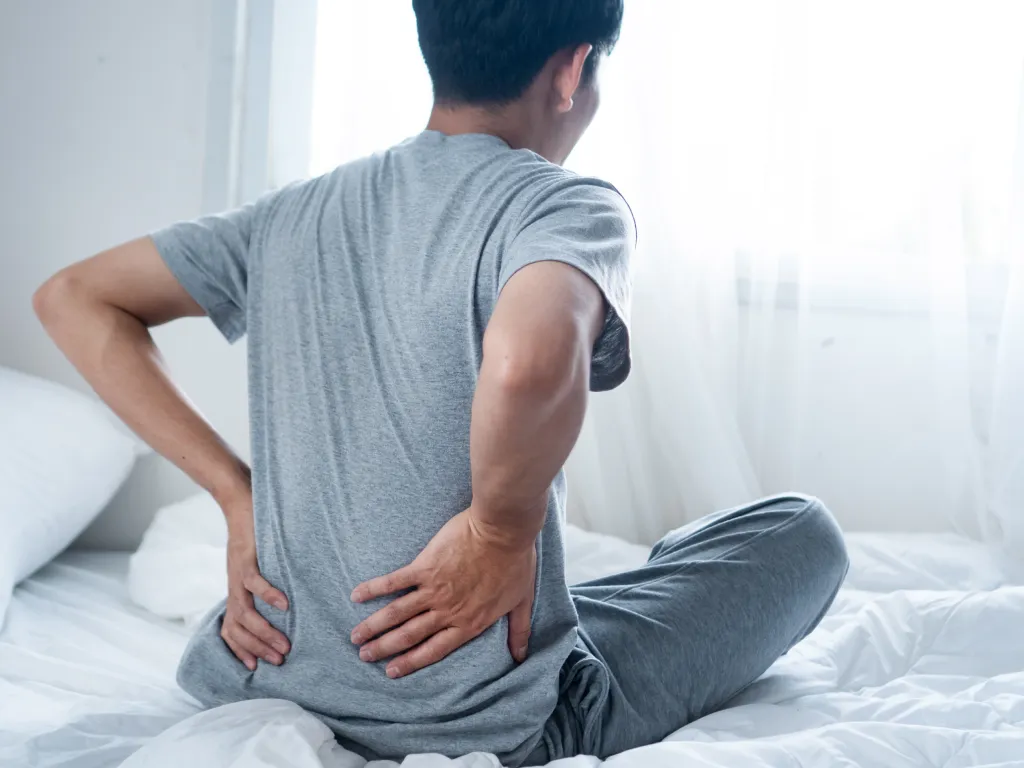
What Is the Link Between Back Pain and Kidney Problems?
Renal-related back pain—often termed flank pain—refers to discomfort originating from the kidneys or ureters that radiates to the upper-lower back, sides, or groin. Unlike mechanical back pain, which changes with movement, kidney pain stems from internal inflammation, infection, or urinary tract obstruction and typically presents as a deep, constant ache or severe spasmodic waves.
┌────────────────────────────────────────────────────────────────────────┐
│                   LOCATION & PAIN CHARACTERISTICS                     │
├────────────────────────────────────────────────────────────────────────┤
│  KIDNEY PAIN:                                                         │
│  • Higher up in the back (below the ribcage, on one or both sides)     │
│  • Deep, severe, or throbbing ache that does not change with rest    │
│  • May radiate toward the lower abdomen, flank, or inner thigh        │
│  • Often accompanied by fever, painful urination, or nausea           │
│                                                                        │
│  MECHANICAL BACK PAIN:                                                │
│  • Lower back, lumbar spine, or gluteal region                        │
│  • Stiff, aching, or burning sensation; worsens with posture/bending  │
│  • May radiate down the leg (sciatica) along nerve paths              │
│  • Improves or shifts with physical rest, heat, or movement changes   │
└────────────────────────────────────────────────────────────────────────┘
How Interventional Pain Management Differs From Standard Care
When patients experience persistent back discomfort, they often cycle through temporary solutions—such as over-the-counter pain relievers, topical ointments, or generalized rest. While standard primary care focuses on managing systemic symptoms, interventional pain medicine takes a targeted, diagnostic-first approach.
Interventional pain management is a specialized medical field focused on pin-pointing the exact anatomical structure generating pain—whether it is a facet joint, an inflamed spinal nerve root, a herniated disc, or a sacroiliac joint. Rather than prescribing long-term oral medications or jumping straight to major invasive spine surgery, an interventional pain specialist uses high-precision image guidance (such as fluoroscopy or ultrasound) to deliver non-surgical, targeted therapies directly to the root cause of discomfort.
How Doctors Distinguish Between Kidney Pain and Spine Pain
Determining whether your symptoms stem from a kidney condition or a musculoskeletal issue involves a systematic clinical evaluation.
- Detailed Clinical History: Your physician evaluates the onset, location, duration, and triggers of your discomfort. They will ask whether movement, bending, or sitting worsens the pain, or if it remains constant regardless of posture.
- Physical & Costovertebral Angle (CVA) Examination: A doctor performs a physical exam, including gentle percussion over the CVA (the angle formed by your lowest rib and spine). Tenderness here often signals kidney inflammation or infection, whereas spinal palpation targets localized muscle spasms or vertebral joint pain.
- Urinalysis and Lab Work: Checking a urine sample for red blood cells, white blood cells, or protein helps rule out urinary tract infections (UTIs) or kidney stones. Basic blood tests measure kidney function (creatinine and BUN).
- Diagnostic Imaging (Ultrasound or CT): If a renal issue is suspected, a renal ultrasound or non-contrast CT scan visualizes kidney stones, hydronephrosis (fluid buildup), or structural swelling.
- Spinal Diagnostic Workup: If urinalysis and renal imaging are clear, an MRI or targeted diagnostic nerve/facet block isolates whether a bulging disc, facet joint arthropathy, or nerve impingement is responsible for your back pain.
Comparing Causes: Kidney Conditions vs. Musculoskeletal Back Issues
The table below outlines common clinical features to help differentiate renal conditions from spinal disorders:
| Feature / Factor | Kidney-Related Problems | Musculoskeletal Back Problems |
| Primary Location | Deep flank area, below the ribs (usually one-sided) | Lumbar spine, lower back, hips, or buttocks |
| Pain Quality | Sharp, stabbing waves (stones) or deep, dull ache (infection) | Stiff, aching, burning, or electric shock-like sensation |
| Effect of Movement | Movement or posture changes do not relieve the pain | Bending, twisting, sitting, or lifting modifies intensity |
| Systemic Symptoms | Fever, chills, nausea, vomiting, cloudy or bloody urine | Localized stiffness, muscle weakness, or leg numbness |
| Common Causes | Kidney stones, pyelonephritis (infection), polycystic kidney disease | Disc herniation, muscle strain, facet joint arthritis, sciatica |
| Primary Specialist | Urologist / Nephrologist | Interventional Pain Specialist / Spine Specialist |

Who Is Suitable for Non-Surgical Interventional Pain Care?
If medical evaluations confirm that your kidneys are functioning normally and that your back discomfort is driven by a spine or nerve issue, non-surgical interventional treatments offer targeted relief.
You may be an ideal candidate for interventional pain therapies if:
- You have localized or radiating lower back pain lasting longer than 4 to 6 weeks.
- Standard physical therapy, rest, and conservative oral medications have failed to yield lasting improvement.
- You wish to avoid or delay major spine surgery.
- Imaging reveals disc bulges, spinal stenosis, or facet joint degeneration corresponding to your symptoms.
- You experience nerve-related leg pain (sciatica) that interferes with daily walking or working.
What to Expect During an Interventional Pain Evaluation
For patients navigating chronic back pain, fear of invasive procedures can be overwhelming. Modern interventional pain medicine prioritizes safety, minimal downtime, and patient comfort.
┌────────────────────────────────────────────────────────────────────────┐
│                   THE INTERVENTIONAL CARE PATHWAY                      │
├────────────────────────────────────────────────────────────────────────┤
│  1. Comprehensive Consultation & Image Review                          │
│  2. Precision Diagnostic Mapping (Diagnostic Blocks)                    │
│  3. Outpatient Procedure Under Fluoroscopic Guidance                   │
│  4. Minimal Recovery Period (Return home same day)                      │
│  5. Integrated Functional Rehabilitation & Maintenance                 │
└────────────────────────────────────────────────────────────────────────┘
- Before the Procedure: Your specialist thoroughly reviews your MRI, clinical history, and previous treatments. A precise treatment plan is outlined, explaining every step so you feel informed and reassured.
- During the Procedure: Advanced image guidance—such as live C-arm fluoroscopy or high-resolution ultrasound—is used to place fine needles with millimeter precision near the affected joint or nerve. Local anesthesia ensures minimal discomfort during the process.
- After the Procedure: Most interventional procedures (such as epidural steroid injections, radiofrequency ablation, or PRP therapy) are outpatient treatments taking under 30 minutes. Patients rest briefly in a recovery bay before heading home the same day, usually resuming normal activities within 24 to 48 hours.
When Should You Consider Seeing an Interventional Pain Specialist?
If you have ruled out kidney infection or renal stones with your primary physician or urologist, yet continue to suffer from debilitating back pain, specialized care is the next step. Persistent back discomfort that limits your mobility, disrupts sleep, or restricts your ability to work requires a targeted diagnostic strategy.
A consultation with a fellowship-trained interventional pain specialist allows for a comprehensive evaluation of your spinal biomechanics and nerve pathways. Dr. P. Purohithi (FIPM, IDRA), practicing at Meraki Pain Management Center and Apollo Hospital, Kondapur, Hyderabad, specializes in precisely diagnosing and treating complex spinal and musculoskeletal pain. By utilizing advanced image-guided techniques—such as radiofrequency ablation, epidural injections, and regenerative therapies—Dr. Purohithi helps patients achieve significant, non-surgical pain relief without defaulting to open surgery.
Frequently Asked Questions
How can I quickly tell if my back pain is from my kidneys or my spine?
Kidney pain is typically located higher up in the back (under the ribcage), feels like a deep, severe ache, and does not change when you move or stretch. Muscle or spine pain is usually located in the lower back, worsens with bending or twisting, and often improves with rest or posture adjustments.
What does kidney pain feel like compared to muscle pain?
Kidney pain is often sharp and sudden (in the case of kidney stones) or a constant, heavy ache (with infection) that may radiate to the groin. Muscle pain feels like a sore, stiff, or tender ache that is directly triggered by physical exertion or prolonged sitting.
Can a pinched nerve in the back mimic kidney pain?
Yes. A pinched spinal nerve in the upper lumbar or lower thoracic region can cause flank pain that wraps around the side of your torso, mimicking kidney pain. A thorough examination and imaging can differentiate nerve compression from renal disease.
When is back pain considered a medical emergency?
Seek emergency medical care immediately if your back pain is accompanied by high fever, severe nausea/vomiting, blood in your urine, sudden loss of bowel or bladder control, or progressive numbness/weakness in both legs.
What non-surgical options exist for chronic lower back pain?
Interventional pain management offers several non-surgical procedures, including image-guided epidural steroid injections, facet joint nerve blocks, radiofrequency ablation (RFA), and platelet-rich plasma (PRP) therapy to target the exact source of pain.
Do interventional pain procedures require hospital admission?
In most cases, no. The vast majority of interventional pain procedures are performed as day-care or outpatient services under local anesthesia, allowing patients to return home the same day.
How does Dr. Purohithi diagnose the root cause of back pain?
Dr. P. Purohithi at Meraki Pain Management Center / Apollo Hospital, Kondapur, conducts a detailed clinical evaluation, reviews diagnostic MRI/CT scans, and uses precision image-guided diagnostic blocks to isolate the exact structural origin of your pain.
Can interventional pain management help if physical therapy didn’t work?
Yes. Physical therapy can sometimes be hindered if underlying inflammation or joint pain is too severe for the patient to perform exercises. Interventional procedures reduce localized inflammation and pain, creating a comfortable window for successful rehabilitation.

Take the Next Step Toward Lasting Pain Relief
Living with persistent back pain—or worrying about whether it stems from a kidney condition—can be stressful and physically exhausting. Getting a clear, accurate diagnosis is the first step toward regaining your quality of life.
If you have evaluated your renal health and are seeking expert, non-surgical second opinions for persistent back pain in Hyderabad, Dr. P. Purohithi at Apollo Hospital, Kondapur, offers comprehensive diagnostic evaluations and tailored interventional treatment plans.
To schedule a consultation at Meraki Pain Management Center, visit https://drpurohithi.com/ or contact the clinic directly to book your appointment.



Leave a Comment