

Table of Contents
Can Stress Cause Back Pain? Understanding the Mind-Body Link and Non-Surgical Care
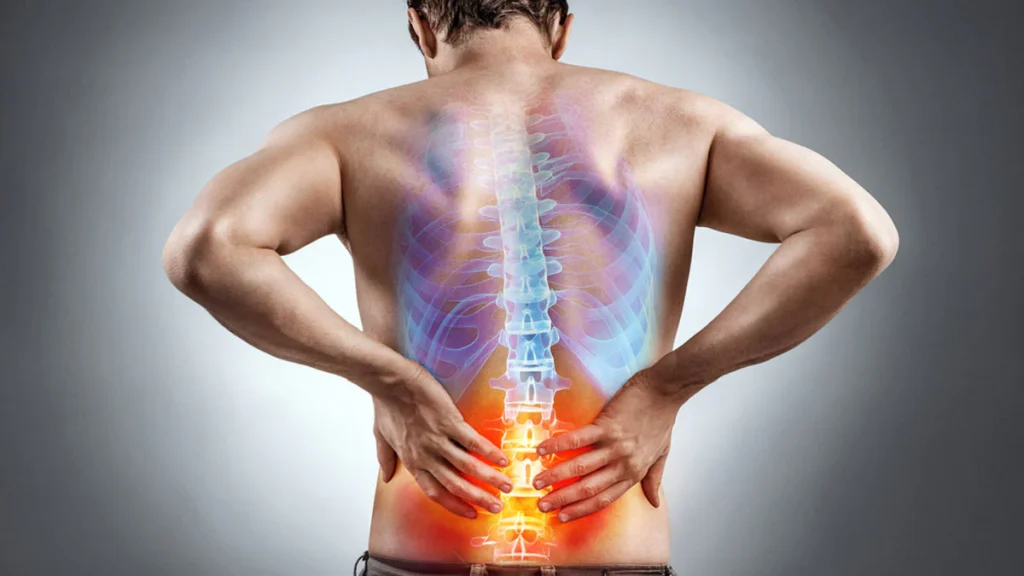
If you find your spine aching after a demanding week at work, you are likely asking: can stress cause back pain? The short answer is an emphatic yes. Psychological stress triggers real physiological responses that directly impact your spinal muscles, soft tissues, and pain receptors.
Imagine a corporate professional in Hyderabad managing tight deadlines while sitting at a desk for ten hours a day. As pressure mounts, breathing becomes shallow, shoulders hitch upward, and core muscles lock into continuous guarding. Over days or weeks, this constant physical tension starves muscles of oxygen, inflames spinal facet joints, and amplifies pain signals sent to the brain.
Whether emotional tension creates brand-new back spasms or magnifies an underlying structural issue—such as a bulged disc or facet joint arthritis—understanding this biological connection is the first step toward lasting, non-surgical recovery.

What is Stress-Induced Back Pain?
Stress-induced back pain is a physiological condition where emotional or mental strain triggers muscle contraction, elevated cortisol levels, and central nerve amplification, resulting in localized or radiating spinal discomfort.
+-----------------------------------------------------------------------------+
|                     STRESS-INDUCED BACK PAIN CASCADE                        |
|                                                                             |
|  [ Psychological Stress / Anxiety ] ---> [ Cortisol & Adrenaline Surge ]    |
|                 ^                                        |                  |
|                 |                                        v                  |
|  [ Persistent Spinal Pain ] <--- [ Muscle Ischemia & Nerve Sensitization ]  |
+-----------------------------------------------------------------------------+
When the body perceives stress, it enters a “fight-or-flight” state, releasing hormones like cortisol and adrenaline. This hormone surge causes paraspinal muscles to tighten automatically to shield the spine from perceived injury.
When stress becomes chronic, these muscles remain in a permanent state of semi-contraction, reducing local blood circulation (ischemia) and leading to painful trigger points, stiffness, and increased sensitivity in surrounding spinal nerves.
How Interventional Care Differs from General Pain Management and Surgery
When dealing with back discomfort linked to high stress, patients often wonder how to treat their symptoms effectively without resorting to long-term medication or major operations.
+-----------------------------------------------------------------------------+
|                   SPECTRUM OF BACK PAIN CARE OPTIONS                        |
|                                                                             |
| [ General Medical Care ] ---> [ Interventional Pain Care ] ---> [ Surgery ] |
|   (NSAIDs & Muscle Relaxants)   (Ultrasound/Fluoroscopy Injections  (Laminectomy|
|   Provides surface relief;      & Nerve Ablation)                & Fusion)  |
|   does not interrupt nerve      Interrupts physical pain cycle   Invasive;  |
|   pain loops or spasms.        precisely at the tissue source.   long rehab.|
+-----------------------------------------------------------------------------+
General medical care typically relies on daily oral pain medications, muscle relaxants, or rest. While these measures offer temporary comfort, systemic drugs do not resolve persistent muscle guarding or target specific inflamed spinal structures. Furthermore, taking medications continuously can lead to side effects over time.
On the opposite end, surgical interventions like lumbar fusion or laminectomy physically modify spinal anatomy. Surgery carries inherently higher risks, requires downtime, and is rarely indicated for stress-related muscle tightness or early-stage facet joint inflammation.
Interventional pain care provides a targeted middle pathway. By using precise image guidance, an interventional pain doctor administers targeted therapies directly to the affected nerve pathways or muscle trigger points. This breaks the pain-spasm cycle immediately, calming hypersensitive spinal nerves so you can engage in rehabilitation without needing surgery.
How Interventional Care Breaks the Stress-Pain Cycle: Step-by-Step
Breaking the combined cycle of physical muscle tension and nerve hypersensitivity requires a systematic, medically guided approach:
  +------------------------------------------------------------------+
  | STEP 1: Diagnostic Mapping & Spinal Biomechanical Evaluation     |
  +------------------------------------------------------------------+
                                   |
                                   v
  +------------------------------------------------------------------+
  | STEP 2: High-Resolution Imaging (Fluoroscopy / Ultrasound)       |
  +------------------------------------------------------------------+
                                   |
                                   v
  +------------------------------------------------------------------+
  | STEP 3: Targeted Local Anesthetic or Anti-Inflammatory Block     |
  +------------------------------------------------------------------+
                                   |
                                   v
  +------------------------------------------------------------------+
  | STEP 4: Radiofrequency Ablation or Trigger Point Inactivation    |
  +------------------------------------------------------------------+
                                   |
                                   v
  +------------------------------------------------------------------+
  | STEP 5: Functional Rehabilitation & Core Stabilization           |
  +------------------------------------------------------------------+
1.Diagnostic Mapping & Spinal Biomechanical Evaluation:Identifying primary pain generators and postural strain.
A comprehensive physical examination evaluates spinal flexibility, muscle tightness, and nerve irritation to determine whether pain stems from muscular spasms, facet joints, or disc pressure.
2.High-Resolution Imaging (Fluoroscopy / Ultrasound):Pinpointing anatomical targets with live visual guidance.
Live fluoroscopic X-ray or high-resolution ultrasound visualization ensures sub-millimeter precision when locating affected spinal nerves, bursae, or muscular trigger points.
3.Targeted Local Anesthetic or Anti-Inflammatory Block:Disrupting the immediate pain signal pathway.
A precise injection delivers targeted medication directly to the irritated nerve roots (e.g., medial branch block or epidural injection), relieving immediate pain and reducing local tissue swelling.
4.Radiofrequency Ablation or Trigger Point Inactivation:Providing durable relief for hyperactive spinal nerves.
If diagnostic blocks confirm nerve-mediated pain, radiofrequency ablation uses thermal energy to temporarily quiet specific pain-conducting nerves, providing extended relief.
5.Functional Rehabilitation & Core Stabilization:Restoring posture, core stability, and movement confidence.
Once the acute pain signal is muted, structured physical therapy strengthens core stabilizing muscles, resets postural habits, and reduces long-term vulnerability to stress.
Breakdown of Treatments for Stress-Amplified Back Pain
Depending on whether stress triggers localized muscle knots, nerve irritation, or joint pain, interventional specialists utilize tailored non-surgical options. The comparison table below highlights how these modalities compare:
| Procedure / Treatment | Primary Mechanism | Primary Indications | Key Clinical Benefit |
| Trigger Point Injections (TPI) | Delivers local anesthetic directly into painful myofascial muscle knots | Severe muscle spasms, postural strain, myofascial pain syndrome | Immediate muscle relaxation and improved local blood flow |
| Lumbar Facet Joint Injection | Administers soothing anti-inflammatory medication into small spinal joints | Facet joint arthritis exacerbated by muscle guarding | Reduces localized aching when bending backward or twisting |
| Medial Branch Block (MBB) | Temporarily numbs the tiny sensory nerves carrying signals from facet joints | Diagnostic confirmation of facet-mediated back pain | Pinpoints exact spinal pain generators with high clarity |
| Radiofrequency Ablation (RFA) | Uses heat energy to disrupt sensory pain signals along targeted nerves | Chronic low back pain unresponsive to conservative care | Extended pain reduction typically lasting 6 to 18 months |
| Epidural Steroid Injection (ESI) | Places targeted anti-inflammatory medication in the epidural space | Sciatica, herniated discs aggravated by stress-induced tension | Reduces nerve root swelling and radiating leg pain |
Who is Suitable for Interventional Back Pain Care?
Interventional treatments offer a clear path forward for individuals experiencing persistent back pain that does not resolve with basic rest or home care.
You may be an ideal candidate for non-surgical interventional evaluation if:
- Your back pain or muscle spasms persist for more than 4 to 6 weeks despite taking medication or altering work habits.
- Emotional or work stress consistently triggers sharp flare-ups, tight muscle knots, or aching in your lower back.
- Pain restricts your ability to sit comfortably at your desk, walk, sleep soundly, or perform daily routines.
- You prefer to avoid invasive spinal surgery or rely less on daily oral pain medications.
- Diagnostic scans (such as an MRI or X-ray) show minor disc bulges or joint arthritis that become painful during high-stress periods.
What to Expect: Before, During, and After Interventional Procedures
Before the Procedure
Your treatment plan starts with an in-depth diagnostic consultation. Your specialist reviews your pain history, examines your spine, and analyzes any available scans to pinpoint the exact source of your discomfort.
During the Procedure
Performed as an outpatient treatment in a clinical setting, image-guided procedures generally take between 15 and 30 minutes. Local numbing medication ensures comfort while live ultrasound or fluoroscopy guides precise delivery.
After the Procedure
Most patients return home shortly after the procedure. While mild, temporary tenderness at the injection site is normal, significant reductions in pain are typically observed within a few days, making it easier to return to normal daily activities and rehabilitation.
When Should You Consider Seeing an Interventional Pain Specialist?
If you have been managing chronic pain for more than 6 weeks with limited relief from medication or physiotherapy, a consultation with a fellowship-trained interventional pain specialist is the logical next step. Dr. P. Purohithi at Apollo Hospital, Kondapur, Hyderabad, specialises in precisely diagnosing and treating the source of your pain using image-guided, minimally invasive techniques — without defaulting to surgery.
Holding recognized international credentials, including FIPM and IDRA, Dr. Purohithi leads Meraki Pain Management Center with a focus on comprehensive, evidence-based care. According to research from the International Association for the Study of Pain (IASP), addressing both the biological pain generator and nervous system sensitivity produces the best long-term outcomes for complex back pain.
Frequently Asked Questions
Can stress cause back pain without any physical structural injury?
Yes, prolonged stress can cause severe back pain entirely on its own by causing persistent muscle contraction, restricting microvascular blood flow, and heightening nerve sensitivity in the spinal cord and brain.
How do I know if my back pain is from stress or a disc problem?
Stress-induced pain often manifests as widespread muscle tightness or aching across the lower back. Disc issues typically present with sharp, localized pain or radiating shooting sensations down the leg (sciatica). An interventional pain doctor can perform a detailed diagnostic evaluation to determine the exact cause.
Is radiofrequency ablation safe for chronic lower back pain?
Yes, radiofrequency ablation is a well-established, safe, and minimally invasive outpatient procedure that uses real-time image guidance to selectively treat small pain-conducting nerves without damaging surrounding tissues.
How long does a facet joint injection last for back pain?
A facet joint injection typically provides pain relief lasting anywhere from several weeks to several months. This relief creates an ideal window for physical therapy and core strengthening.
How much does a nerve block cost in Hyderabad?
The cost of a nerve block or image-guided spinal procedure in Hyderabad varies depending on the specific technique, targeted location, and facility setting. A consultation at Meraki Pain Management Center provides a clear pricing structure tailored to your treatment plan.
Can I avoid spine surgery with interventional pain treatments?
In many cases, yes. Precision interventional treatments effectively relieve pain caused by facet joint inflammation, muscle spasms, and minor disc bulges, allowing patients to recover without undergoing open spinal surgery.
What is central sensitization and how does stress affect it?
Central sensitization is a condition where the central nervous system becomes hyper-reactive, amplifying normal sensory inputs into pain signals. Chronic stress accelerates this process, making the spine much more sensitive to minor physical strains.
What is the recovery time after a non-surgical spinal procedure?
Because interventional procedures are minimally invasive outpatient treatments, recovery is rapid. Most patients resume light daily activities within 24 to 48 hours and begin guided core rehabilitation shortly after.

Restoring Balance and Spinal Comfort
Asking can stress cause back pain is often the first step toward understanding how closely your mind and spine are connected. By combining stress-reduction strategies with modern, image-guided interventional procedures, you can effectively disrupt the pain cycle, reduce muscle guarding, and protect your long-term spinal health.
If persistent back tightness or shooting pain continues to interfere with your daily life, seeking a professional evaluation from a pain specialist can provide clarity and a direct path to relief.
If you are considering non-surgical back pain treatments in Hyderabad, Dr. P. Purohithi at Apollo Hospital, Kondapur, offers a thorough diagnostic consultation before any procedure is recommended.




Leave a Comment