

Table of Contents
Best Sleeping Positions for Back Pain: Restoring Spinal Alignment and Nighttime Relief
Discovering the best sleeping positions for back pain is often the missing key to breaking the exhausting cycle of sleepless nights and painful mornings. When you are coping with lower back aches, nerve compression, or stiff spinal joints, how you lie down directly dictates how much mechanical stress your spinal column endures for seven to eight continuous hours.
Consider a typical desk worker in Hyderabad who sits in an ergonomic office chair all day, only to toss and turn at night because every position triggers a dull, radiating ache in the lower back. Poor nocturnal spinal alignment forces muscles to contract continuously to protect irritated spinal structures. Adopting biomechanically sound sleep postures, utilizing supportive pillow placement, and knowing when to consult an interventional pain doctor can help you rest deeply and protect your spine.

What Are the Best Sleeping Positions for Back Pain?
The best sleeping positions for back pain are biomechanically neutral postures—such as back sleeping with knee elevation or side sleeping with a pillow between the knees—that maintain the spine’s natural curvature from the neck to the pelvis. These targeted positions prevent unnatural spinal twisting, decompress intervertebral discs, and reduce muscular tension across the lumbar and sacral regions.
+-----------------------------------------------------------------------------+
|                     NOCTURNAL SPINAL ALIGNMENT CYCLE                        |
|                                                                             |
|  [ Poor Sleep Posture ] ---> [ Unnatural Disc Compression & Muscle Strain ] |
|            ^                                                   |            |
|            |                                                   v            |
|  [ Restorative Rest ] <--- [ Decompressed Nerves ] <--- [ Neutral Alignment]|
+-----------------------------------------------------------------------------+
During sleep, your body relies on neutral alignment to allow tissues to repair and spinal discs to rehydrate. When your posture sags or twists, the surrounding ligaments and nerve roots remain under mechanical stress. By making small pillow adjustments tailored to your specific condition, you minimize joint pressure and allow inflamed tissues to rest.
How Interventional Pain Care Addresses Nocturnal Spinal Strain
While modifying your sleeping posture provides valuable structural support, posture adjustments alone cannot always resolve underlying structural injuries. It is essential to understand how specialized interventional pain care differs from basic home care or invasive options when night pain persists.
+-----------------------------------------------------------------------------+
|                 SPECTRUM OF SPINE & SLEEP CARE OPTIONS                      |
|                                                                             |
| [ Basic Lifestyle Care ] ----> [ Interventional Pain Care ] ---> [ Surgery ]|
|  (Pillows & Rest)             (Image-Guided Non-Surgical Care)  (Fusion)    |
|  Provides surface comfort;    Targeted nerve decompression;       High risk;  |
|  does not fix nerve lesions.  preserves natural biomechanics.     long rehab. |
+-----------------------------------------------------------------------------+
Primary home treatments—such as changing mattresses, using body pillows, or taking over-the-counter painkillers—focus on surface comfort. While helpful, they may not quiet an intensely inflamed nerve root or a severely arthritic facet joint.
Conversely, open surgery alters structural anatomy and involves significant recovery periods. Interventional pain care bridges this gap by using real-time fluoroscopic (X-ray) or ultrasound guidance to deliver anti-inflammatory solutions precisely to the underlying spinal lesion. This quiets nerve pain at its source, allowing you to sleep comfortably and engage effectively in physical rehabilitation.
How to Set Up Your Bed for Maximum Spinal Support: Step-by-Step
Optimizing your sleep arrangement requires a systematic approach to support the natural curves of your neck, upper back, and lower lumbar region. Follow this step-by-step setup to establish a neutral sleeping environment:
  +------------------------------------------------------------------+
  | STEP 1: Assess and Select a Medium-Firm Mattress Surface        |
  +------------------------------------------------------------------+
                                   |
                                   v
  +------------------------------------------------------------------+
  | STEP 2: Position a Supportive Head and Neck Pillow               |
  +------------------------------------------------------------------+
                                   |
                                   v
  +------------------------------------------------------------------+
  | STEP 3: Place a Bolster Under or Between Your Knees              |
  +------------------------------------------------------------------+
                                   |
                                   v
  +------------------------------------------------------------------+
  | STEP 4: Fill the Lumbar Gap with a Small Support Roll            |
  +------------------------------------------------------------------+
                                   |
                                   v
  +------------------------------------------------------------------+
  | STEP 5: Practice a Safe Log-Roll Technique for Getting Out of Bed|
  +------------------------------------------------------------------+
1.Assess and Select a Medium-Firm Mattress Surface:Establishing a proper structural foundation.
Choose a mattress that offers firm structural support without causing high-pressure points on your hips and shoulders. An overly soft mattress allows the pelvis to sink, twisting the lumbar spine.
2.Position a Supportive Head and Neck Pillow:Aligning the cervical spine with the thoracic cage.
Use a pillow that keeps your head aligned with your torso. Avoid thick, overly elevated pillows that force your neck forward into chin-to-chest flexion.
3.Place a Bolster Under or Between Your Knees:Unloading the lower lumbar discs and pelvis.
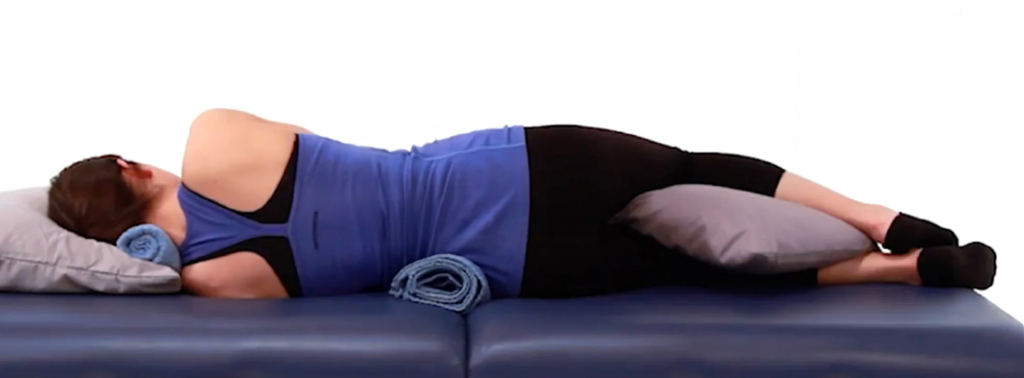
If sleeping on your back, place a firm pillow under your knees to flex the hips slightly. If sleeping on your side, draw your knees up gently and place a contour pillow between them to prevent hip rotation.
4.Fill the Lumbar Gap with a Small Support Roll:Supporting the natural inward curve of the lower back.
If you have a pronounced lumbar curve, place a small, rolled towel under your lower back to prevent the lumbar spine from sagging into flat-back fatigue.
5.Practice a Safe Log-Roll Technique for Getting Out of Bed:Preventing acute morning rotational strain.
When waking up, bend your knees, roll onto your side as a single unit, and use your arms to push yourself up into a seated position. Avoid twisting or flexing your torso abruptly.
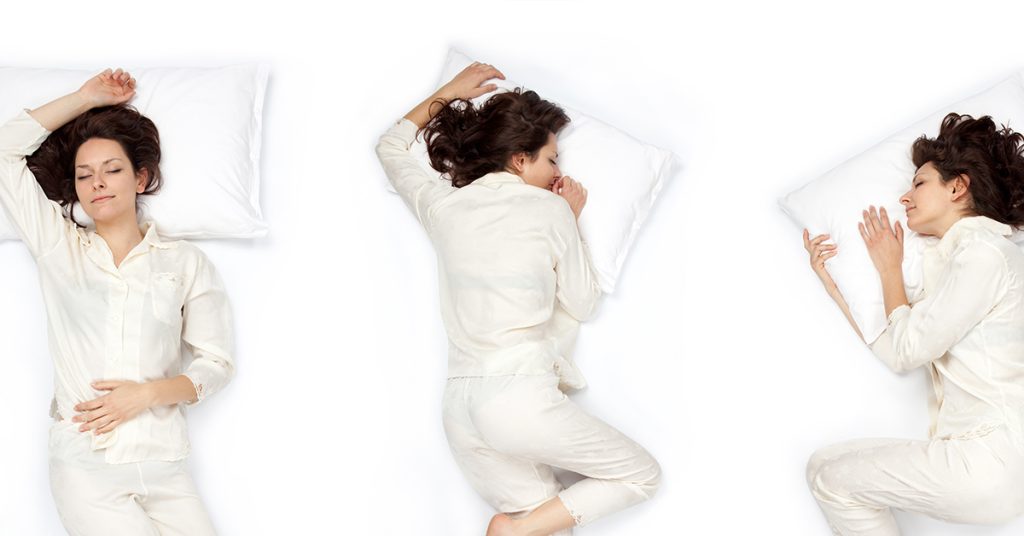
Breakdown of Sleeping Positions: Pros, Cons, and Adjustments
Different back conditions respond uniquely to specific sleeping postures. The following comparison highlights how each posture impacts common spinal issues:
| Sleeping Position | Underlying Mechanism | Ideal For | Required Modification |
| Back Sleeping (Supine) | Distributes body weight evenly; minimizes pressure points | Lumbar disc bulges, general mechanical low back pain | Place a firm pillow directly under the knees |
| Side Sleeping (Fetal Variant) | Opens the posterior intervertebral foramina | Spinal stenosis, facet joint osteoarthritis | Place a thick pillow between knees and ankles |
| Reclined Back Sleeping | Reduces anterior pressure on the lumbar spine | Ischemic leg pain, severe degenerative disc disease | Use an adjustable bed or wedge pillow elevation |
| Stomach Sleeping (Prone) | Not Recommended: Flattens natural curves, stresses the cervical spine | Rare cases of central disc extension (temporary relief) | Place a flat pillow under lower pelvis/abdomen |
Who Needs Targeted Nocturnal Posture Care?
Modifying your sleep posture is a beneficial, low-risk habit for anyone suffering from spine-related discomfort.
You will benefit significantly from adopting structured sleeping positions if:
- You experience intense morning stiffness that takes more than 30 minutes of walking to ease.
- You wake up repeatedly during the night with sharp, radiating leg pain, numbness, or tingling (sciatica).
- Long hours working at a desk leave your lower back tired and aching by the time you lie down.
- You have been diagnosed with bulging discs, spinal stenosis, or facet joint arthritis on an MRI.
- You want to reduce your reliance on nighttime pain medications by using natural postural support.
What to Expect: Before, During, and After Sleep Adjustments
Before Changing Postures
You may feel frustrated after nights of interrupted sleep. Take time to evaluate your current mattress support, head pillow height, and leg alignment before making sudden changes.
During the Transition
Adapting to a new sleeping position often takes 7 to 14 days. Your body may naturally shift back to habitual postures during deep sleep cycles; gently reposition your supportive pillows whenever you wake up.
After Consistent Application
Within two to three weeks of maintaining neutral alignment, most patients notice reduced morning stiffness, improved sleep continuity, and greater physical comfort during the day.
When Should You Consider Seeing an Interventional Pain Specialist?
While optimizing your sleeping position provides valuable physical support, it cannot repair structural spinal damage or reverse chronic nerve compression on its own.
If you have been managing chronic pain for more than 6 weeks with limited relief from medication or physiotherapy, a consultation with a fellowship-trained interventional pain specialist is the logical next step. Dr. P. Purohithi at Apollo Hospital, Kondapur, Hyderabad, specialises in precisely diagnosing and treating the source of your pain using image-guided, minimally invasive techniques — without defaulting to surgery.
Holding advanced international credentials (FIPM, IDRA) and leading the care team at Meraki Pain Management Center, Dr. Purohithi correlates your symptoms with high-resolution diagnostic imaging to treat conditions like herniated discs, sciatica, and facet arthritis at their exact source.
Frequently Asked Questions
Can a bad mattress cause permanent spinal damage?
A worn-out or sagging mattress will not cause permanent structural damage, but it can aggravate existing spine conditions by forcing your spine into twisted positions all night. A medium-firm mattress generally offers the best balance of support and pressure relief.
Is side sleeping bad for sciatica?
Side sleeping can be very comfortable for sciatica, provided you place a pillow between your knees. This pillow stops your top leg from sliding forward, preventing pelvic twisting that pinches the sciatic nerve root.
Why does my back pain feel worse when I wake up in the morning?
During sleep, your intervertebral discs absorb fluid and expand slightly. If you sleep in a strained posture, this extra fluid pressure combined with tight muscles leads to sharp morning stiffness and pain.
How long does radiofrequency ablation last for chronic spine pain?
Radiofrequency ablation (RFA) mutes pain signals from arthritic facet joints, typically providing relief for 6 to 18 months. As nerve fibers gradually regenerate over time, the procedure can be safely repeated if needed.
How much does a targeted nerve block cost in Hyderabad?
The cost of an image-guided nerve block in Hyderabad depends on the specific spine level, the facility setup, and whether live fluoroscopy is required. A personal consultation at Meraki Pain Management Center provides a clear breakdown tailored to your care plan.
Can PRP therapy replace knee or spine surgery?
Platelet-Rich Plasma (PRP) therapy uses concentrated growth factors from your own blood to promote tissue repair in inflamed ligaments and joints. For mild to moderate tissue wear, PRP can help manage pain and delay or prevent the need for major surgery.
Is stomach sleeping always harmful for back pain?
Stomach sleeping flattens the natural curve of your lower back and forces your head to turn to one side for hours, straining your neck muscles. If you must sleep on your stomach, placing a pillow under your hips can reduce lower back stress.
How do I know if I need a pain management specialist?
You should see a pain management specialist if your back or neck pain lasts longer than four to six weeks, wakes you up at night, shoots down your legs, or fails to improve with rest and basic physical therapy.
Restoring Healthy Sleep and Active Days
Consistently using the best sleeping positions for back pain gives your spine the rest it needs to recover from daily physical stress. By supporting your natural spinal alignment with proper pillow placement and a firm mattress, you can wake up with less pain and more energy for your day.
If night pain continues to disturb your rest despite posture changes, seeking a direct evaluation from an interventional pain doctor will help you address the root cause of your discomfort.
If you are seeking non-surgical back pain relief in Hyderabad, Dr. P. Purohithi at Apollo Hospital, Kondapur offers thorough diagnostic consultations to help guide your recovery.
- Explore Non-Surgical Therapies: Visit Dr. Purohithi’s Care Portal
- Schedule a Visit: Book a consultation at Meraki Pain Management Center, Apollo Hospital, Kondapur, Hyderabad to start your tailored treatment plan.




Leave a Comment