

Table of Contents
What Is the Best Treatment for Knee Pain? Modern Non-Surgical Solutions
Asking what is the best treatment for knee pain? is often the first step toward reclaiming your active life when simple daily tasks start feeling like overwhelming obstacles. Whether it is severe stiffness preventing someone from walking down a flight of stairs, sharp discomfort during morning walks, or persistent aching after sitting at a desk, knee joint distress affects millions of adults worldwide.
The straightforward reality is that there is no single “magic pill” or universal solution. The best treatment is always one that is precisely tailored to your specific stage of joint wear, underlying inflammation, and functional goals. While many patients assume their choices are limited to lifetime pain medication or major joint replacement surgery, modern medicine offers a robust spectrum of evidence-based interventional therapies. By addressing the root anatomical causes of joint distress under continuous visual guidance, modern care restores mobility safely and non-surgically.

What Is Interventional Knee Pain Treatment?
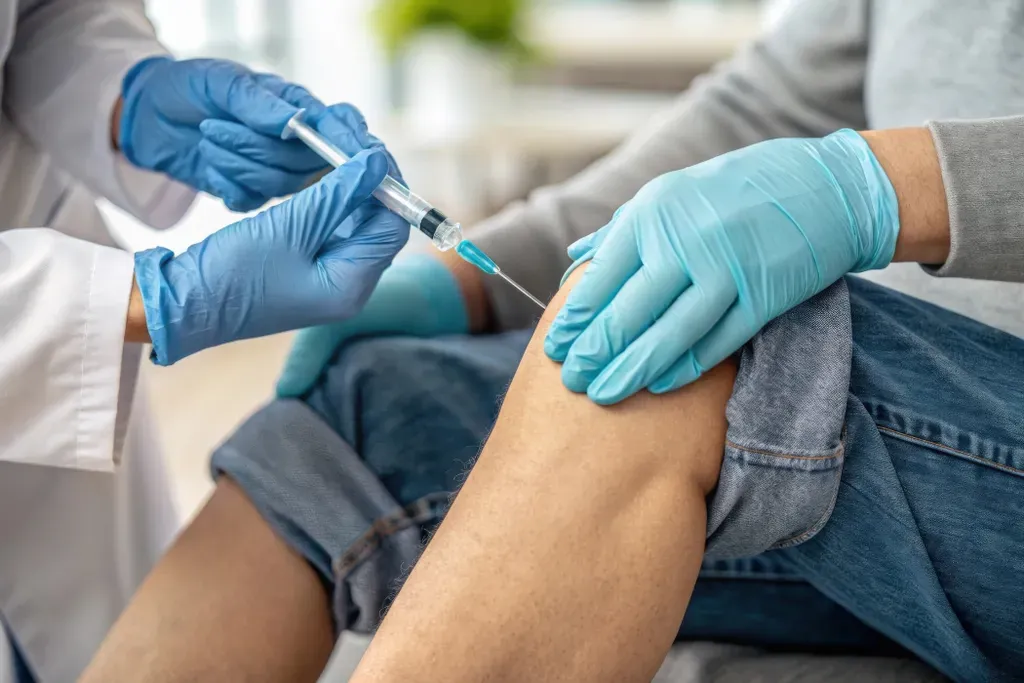
Interventional knee pain treatment refers to a specialized subspecialty of medicine focused on diagnosing and treating painful joint conditions at their exact anatomical source using targeted, image-guided, minimally invasive procedures. Rather than relying on oral medications that circulate throughout the entire body, interventional specialists utilize high-resolution ultrasound or live X-ray guidance to deliver targeted therapies directly to damaged cartilage, inflamed bursae, or sensitized nerve pathways.
+-----------------------------------------------------------------------------+
|                     THE INTERVENTIONAL DIAGNOSTIC PROCESS                   |
|                                                                             |
|  [ Targeted Imaging ] ----> [ Diagnostic Block ] ----> [ Targeted Therapy ] |
|  (Ultrasound / C-arm)      (Pinpoints exact nerve)    (Regenerative / RFA)  |
+-----------------------------------------------------------------------------+
How Is This Different from What Most Patients Receive?
When exploring what is the best treatment for knee pain?, most individuals encounter a traditional medical model that moves directly from basic conservative care to major surgery. Standard conservative management usually involves resting the joint, applying ice or heat packs, and taking systemic anti-inflammatory drugs. While these steps help temporary strains, they rarely arrest progressive conditions like osteoarthritis or chronic tendinopathy.
+-----------------------------------------------------------------------------+
|                     TRADITIONAL CARE vs. INTERVENTIONAL CARE                 |
|                                                                             |
|  [ Standard Care ]     ---> Masks pain using oral pills or general rest.    |
|  [ Interventional Care]---> Direct, image-guided treatment at the pain site|
|                             to preserve joint function non-surgically.      |
|  [ Open Surgery ]      ---> Replaces joint structure entirely (last resort). |
+-----------------------------------------------------------------------------+
On the opposite end of the spectrum is total knee replacement surgery. While joint replacement can be life-changing for end-stage structural destruction, many patients fall into a wide middle ground: their pain is too severe for over-the-counter pills, yet open surgery remains premature, unwanted, or clinically high-risk due to underlying health conditions.
Interventional pain medicine bridges this gap. Following guidelines established by the International Association for the Study of Pain (IASP) and the Indian Society for Study of Pain (ISSP), an interventional pain doctor evaluates the precise joint mechanics and nerve pathways. By placing therapeutic micro-injections or thermal energy within millimeters of the target site, an experienced pain management specialist provides durable non-surgical pain relief while preserving natural joint anatomy.

How Does It Work? A Step-by-Step Care Path
Finding what is the best treatment for knee pain? for your specific situation requires a systematic, step-by-step clinical pathway focused on safety and functional recovery.
  +------------------------------------------------------------------+
  | STEP 1: Diagnostic Evaluation & Clinical Mapping                 |
  +------------------------------------------------------------------+
                                   |
                                   v
  +------------------------------------------------------------------+
  | STEP 2: Real-Time Dynamic Imaging (Ultrasound / Fluoroscopy)      |
  +------------------------------------------------------------------+
                                   |
                                   v
  +------------------------------------------------------------------+
  | STEP 3: Diagnostic Genicular Nerve or Intra-Articular Block      |
  +------------------------------------------------------------------+
                                   |
                                   v
  +------------------------------------------------------------------+
  | STEP 4: Application of Precision Interventional Therapy          |
  +------------------------------------------------------------------+
                                   |
                                   v
  +------------------------------------------------------------------+
  | STEP 5: Guided Rehabilitation & Biomechanical Retraining         |
  +------------------------------------------------------------------+
1.Diagnostic Evaluation & Clinical Mapping:Establishing an accurate baseline.
Your evaluation begins with a comprehensive physical exam analyzing joint stability, weight-bearing axis, and gait mechanics alongside relevant X-rays or MRI scans.
2.Real-Time Dynamic Imaging:Visualizing soft tissues and spaces.
High-resolution point-of-care ultrasound or fluoroscopy (C-arm X-ray) is used to map internal joint structures, effusion, and surrounding nerve branches with pinpoint accuracy.
3.Diagnostic Genicular Nerve or Intra-Articular Block:Testing the precise pain source.
A minute amount of local anesthetic is placed directly target to the joint’s sensory nerves. Immediate, temporary relief confirms the exact anatomical origin of your pain before long-term treatment.
4.Application of Precision Interventional Therapy:Administering image-guided care.
Depending on joint health, the doctor administers targeted therapies such as viscosupplementation (lubrication), Platelet-Rich Plasma (PRP) growth factors, or cooled radiofrequency ablation (RFA).
5.Guided Rehabilitation & Biomechanical Retraining:Restoring muscle strength and motion.
Once joint pain is substantially reduced, structured physical therapy strengthens the quadriceps and hamstring muscles to protect joint mechanics and maintain long-term function.
Types of Non-Surgical Interventional Knee Treatments
Because joint discomfort stems from diverse causes—including cartilage degeneration, synovial inflammation, or nerve sensitization—interventional medicine utilizes tailored modalities matching your stage of condition.
| Procedure Type | Primary Indication | Mechanism of Action | Treatment Protocol | Expected Duration of Relief |
| Viscosupplementation (Hyaluronic Acid) | Mild-to-Moderate Knee Osteoarthritis | Restores natural joint fluid viscosity, improving shock absorption and smooth glide | 1 to 3 outpatient injections | Typically 6 to 12 months |
| Platelet-Rich Plasma (PRP) Therapy | Tendinopathies, Early Cartilage Wear, Strain | Delivers concentrated autologous growth factors to support natural tissue environment | 1 to 3 sessions spaced weeks apart | Typically 9 to 18 months |
| Cooled Radiofrequency Ablation (RFA) | Advanced Osteoarthritis, Post-Surgical Pain | Applies controlled thermal energy to interrupt sensory genicular nerve signals | Single outpatient day-care session | Typically 6 to 24 months |
| Ultrasound-Guided Corticosteroid Injection | Acute Effusion, Severe Arthritic Flare-ups | Delivers concentrated anti-inflammatory medication directly into inflamed bursae/space | Single therapeutic procedure | Typically 3 to 6 months |
Who Is Suitable for Non-Surgical Knee Treatments?
You may be a suitable candidate for modern non-surgical interventional knee care if you meet the following clinical criteria:
- Persistent Symptoms: You have experienced knee aching, swelling, or stiffness for more than 4 to 6 weeks that has not improved with basic medications or physical therapy.
- Functional Limitations: Joint pain directly impairs your ability to walk, use stairs, kneel, work at your desk, or sleep comfortably.
- Medication Intolerance: Oral anti-inflammatory drugs (NSAIDs) cause stomach discomfort, elevated blood pressure, or pose risks to your kidney health.
- Surgical Delay or Avoidance: You wish to avoid major open surgery, or you have medical co-morbidities (such as heart conditions, diabetes, or advanced age) that make surgery risky.
- Can I avoid knee replacement surgery with treatment? For many patients with mild, moderate, or even select advanced stages of arthritis, image-guided interventional procedures provide durable pain relief and functional restoration, allowing them to comfortably postpone or avoid total joint replacement.
What to Expect: Before, During, and After Treatment
Understanding the procedural process helps reduce anxiety and prepares you for a smooth, comfortable outpatient recovery.
Before the Procedure
Your care team reviews your medical history, current medications, and imaging scans. Detailed instructions are provided regarding meal timing and medication adjustments. Because these are minimally invasive outpatient procedures, extensive pre-procedure fasting or hospital stays are unnecessary.
During the Procedure
All procedures take place in a specialized day-care suite under local anesthesia. Using real-time ultrasound or fluoroscopy guidance, micro-needles are positioned with millimeter precision. Most patients report feeling only light pressure during the 15- to 30-minute process.
After the Procedure
You will rest comfortably in a recovery area for 30 to 60 minutes before being discharged home the same day. Patients are generally advised to take it easy for 24 to 48 hours before gradually resuming daily activities and progressive physical rehabilitation.
When Should You Consider Seeing an Interventional Pain Specialist?
If knee pain continues to interfere with your mobility despite conservative management, consulting an interventional specialist is a logical next step.
In Hyderabad, Dr. P. Purohithi at Meraki Pain Management Center, located within Apollo Hospital, Kondapur, specializes in pinpointing and treating the anatomical source of joint discomfort using minimally invasive, image-guided techniques without defaulting to open surgery. Holding specialized qualifications including a Fellowship in Interventional Pain Medicine (FIPM) and certification in ultrasound-guided procedures (IDRA), Dr. Purohithi provides comprehensive joint preservation care.
By practicing in a leading pain clinic Hyderabad residents rely on, patients gain access to advanced diagnostic and therapeutic care within a world-class clinical setting.
Frequently Asked Questions (FAQs)
How do I know if I need a pain management specialist or an orthopedic surgeon?
If you are seeking effective, non-surgical relief to reduce joint pain and improve mobility while preserving your natural knee, an interventional pain specialist Kondapur is your ideal primary consultant. If you have experienced an acute traumatic fracture, complete ligament rupture, or joint lock requiring structural reconstruction, an orthopedic surgeon is appropriate.
Can PRP replace knee surgery?
In cases of mild-to-moderate knee osteoarthritis, chronic tendinopathy, or early cartilage wear, PRP therapy can reduce joint inflammation and support local tissue health. While it does not rebuild a completely worn joint, it frequently provides sufficient functional improvement to help patients delay or avoid major surgery.
Is radiofrequency ablation (RFA) safe for knee pain?
Yes, genicular radiofrequency ablation is a safe, well-established procedure when performed by a qualified specialist using continuous live imaging. It targets only the sensory nerves transmitting pain signals to the brain, leaving motor nerves controlling leg movement completely unaffected.
How long does radiofrequency ablation last?
Clinical studies show that radiofrequency ablation typically provides significant joint pain relief lasting between 6 and 24 months. Over time, sensory nerves may slowly regrow, at which point the outpatient procedure can be safely repeated if needed.
Is PRP therapy painful?
PRP therapy involves a simple blood draw followed by an injection under local anesthesia. Patients typically experience minor localized fullness or soreness for 24 to 48 hours post-procedure, which quickly subsides as healing growth factors begin working.
Are image-guided knee injections covered by insurance in Hyderabad?
Many private health insurance policies cover medically necessary day-care interventional procedures, especially when conducted within an accredited hospital facility like Apollo Hospital, Kondapur. It is recommended to check specific policy terms with your insurance provider prior to treatment.
How quickly can I walk after an interventional knee procedure?
Because interventional procedures involve no surgical incisions, most patients walk independently out of the clinic shortly after their brief recovery period. Light daily walking is typically encouraged within 24 to 48 hours.
What is the cost of non-surgical knee treatment at Meraki Pain Management Center?
The cost varies depending on the specific procedure required—such as PRP, viscosupplementation, or radiofrequency ablation—and whether single or multiple sessions are needed. A preliminary consultation allows Dr. Purohithi to recommend an exact diagnostic and therapeutic plan.

Taking the Next Step Toward Active Mobility
Discovering what is the best treatment for knee pain? comes down to finding the precise approach for your unique joint condition. Modern interventional pain medicine provides effective, non-surgical pathways that reduce inflammation, interrupt pain signals, and preserve natural joint anatomy.
If you are considering non-surgical knee treatment in Hyderabad, Dr. P. Purohithi at Apollo Hospital, Kondapur, offers a thorough diagnostic evaluation before recommending any customized treatment plan.



Leave a Comment