

Table of Contents
Do Desk Jobs Cause Lower Back Pain? Understanding Sedentary Spine Stress & Non-Surgical Relief
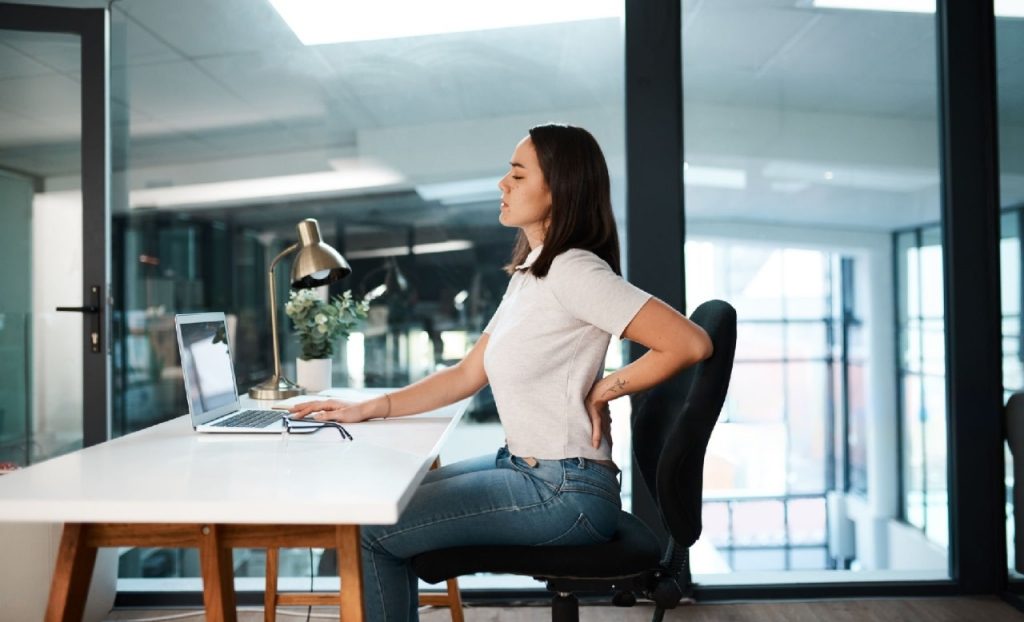
Many professionals wonder: do desk jobs cause lower back pain after sitting through back-to-back virtual meetings or late-night coding sprints? The short answer is yes—prolonged sitting significantly increases mechanical load on your lumbar spine, often triggering persistent stiffness, muscle fatigue, and sharp disc discomfort.
For thousands of software developers, financial analysts, and corporate employees across IT hubs like HITEC City, Gachibowli, and Madhapur, an 8-to-10-hour workday behind a monitor has made chronic spinal discomfort a daily reality. While sitting feels like rest, it places continuous static pressure on intervertebral discs and surrounding postural muscles. Understanding why this happens—and recognizing when discomfort signals a structural spinal issue—is the first step toward lasting mobility and comfort.

What Is Sitting-Induced Lumbar Strain?
+-----------------------------------------------------------------------------+
|                     SNIPPET DEFINITION & CORE MECHANISM                     |
|                                                                             |
| Sitting-induced lumbar strain is mechanical stress placed on the lower spine |
| due to sustained postural load. Sitting increases intradiscal pressure by   |
| up to 40% compared to standing, overstretching posterior ligaments and      |
| starving intervertebral discs of nutrient-rich fluid exchange.              |
+-----------------------------------------------------------------------------+
Sitting-induced lumbar strain refers to biomechanical stress placed on the lower spine, joints, and surrounding tissues during prolonged sedentary activity. When sitting, your pelvis tilts backward, flattening the natural inward curve (lordosis) of your lower back. This posture transfers body weight onto the intervertebral discs and facet joints rather than distributing it through active leg and core muscles.
How Desk-Job Spine Strain Differs From Other Types of Back Pain
Back pain caused by sedentary desk work has distinct biomechanical causes compared to acute injuries from sports or sudden heavy lifting.
+-----------------------------------------------------------------------------+
|                  MECHANICAL LOADING: SITTING VS. STANDING                    |
|                                                                             |
| [ Standing erect ] -------------> 100% Relative Intradiscal Pressure        |
| [ Sitting slumped ] ------------> 140% to 180% Intradiscal Pressure         |
| [ Slouched forward ] -----------> Up to 200% Intradiscal Pressure           |
+-----------------------------------------------------------------------------+
When you lift a heavy box incorrectly, pain usually stems from an acute tearing or micro-sprain of muscle fibers or disc cartilage. In contrast, desk job strain develops quietly over months or years through micro-trauma.
- Static Load vs. Dynamic Motion: Muscles need alternating contraction and relaxation to pump blood and oxygen through tissue. Sitting forces lower back muscles into a state of continuous contraction, leading to local ischemia (reduced blood flow), metabolic waste buildup, and painful spasms.
- Nutritional Deprivation of Discs: Spinal discs do not have a dedicated direct blood supply. They rely on movement—a mechanism called imbibition—to absorb fluid and nutrients. Prolonged sitting acts like a squeezed sponge, pushing moisture out and preventing rehydration.
- Adaptive Muscle Shortening: Sitting for hours leaves your hip flexors (psoas) locked in a shortened position, pulling your pelvis forward when you finally stand and placing immediate shear strain on the L4-L5 and L5-S1 lumbar segments.
How Sitting Strains the Spine: Step-by-Step Mechanical Breakdown
Understanding how prolonged sitting harms spinal structures helps clarify why simple rest or oral pain relievers rarely fix the root problem.
+-----------------------------------------------------------------------------+
|                  PATHWAY FROM DESK POSTURE TO NERVE PAIN                    |
|                                                                             |
|  [ Prolonged Slumping ] ---> [ Reduced Lumbar Lordosis ]                   |
|                                       |                                     |
|                                       v                                     |
|  [ Disc Compression & Bulging ] ---> [ Spinal Nerve Inflammation ]          |
+-----------------------------------------------------------------------------+
1.1. Posterior Pelvic Tilt and Slouching:Postural breakdown reduces natural lumbar curvature.
As postural fatigue sets in after 30 to 45 minutes of computer work, the deep core abdominal muscles relax. The pelvis rolls backward, flattening the natural lumbar curve and putting tension on the thoracolumbar fascia.
2.2. Increased Hydrostatic Pressure on Lumbar Discs:Intradiscal pressure rises sharply.
In a slumped seated position, fluid pressure within the L4-L5 and L5-S1 discs rises by up to 40% compared to standing. This pressure pushes the gel-like nucleus pulposus backward against the delicate outer disc fibers (annulus fibrosus).
3.3. Ligamentous Creep and Tissue Slackening:Ligaments overstretch under static tension.
Sustained stretching causes spinal ligaments to undergo “creep”—a process where elastic fibers lose their ability to snap back immediately. This leaves the spinal joints hyper-mobile and unprotected when you stand up after hours at a desk.
4.4. Hip Flexor Tightness and Paraspinal Spasm:Muscle imbalance restricts local circulation.
The hip flexors tighten in a seated position, while the gluteal muscles become inactive (often called “gluteal amnesia”). Paraspinal muscles attempt to compensate by overworking, resulting in deep, achey muscle spasms across the lower back.
5.5. Disc Bulging and Nerve Root Irritation:Nerve root compression occurs in advanced cases.
Over time, weakened outer disc fibers may bulge or herniate under continuous pressure, compressing nearby nerve roots (such as the sciatic nerve) and causing radiating leg pain, tingling, or numbness.

Categorizing Desk-Related Lower Back Issues
Not all desk-related back pain feels the same. Symptoms typically fall into three primary clinical categories depending on the underlying structure affected:
| Condition Category | Primary Cause / Mechanism | Common Symptoms | Typical Relief Response |
| Postural Paraspinal Myofascial Strain | Muscle fatigue and localized metabolic waste buildup from prolonged static holding. | Dull, achey pain across the lower back; stiffness when getting up from a chair. | Responds well to heat, stretching, short walks, and ergonomic workspace changes. |
| Lumbar Disc Herniation / Bulge | Outer disc ring weakening due to continuous forward flexion and compression. | Sharp, localized pain that intensifies with forward bending or coughing; shooting pain down one leg. | Requires specialized evaluation; benefits from targeted physical rehab or interventional procedures. |
| Facet Joint Arthropathy | Increased wear on the small posterior joints of the spine due to altered posture. | Focal discomfort on one or both sides of the spine that worsens when leaning backward or twisting. | May respond poorly to basic stretches; managed effectively with targeted non-surgical care. |
Who Is Most Vulnerable to Desk-Job Back Strain?
While anyone working a computer desk job can experience lumbar strain, certain work habits and physical factors increase your risk:
- Professionals Working 8+ Hour Shifts: Software engineers, data analysts, customer support leads, and financial experts who sit for extended periods without movement breaks.
- Individuals with Uncorrected Workspace Ergonomics: Working from dining chairs, soft sofas, or monitors set below eye level, forcing continuous forward head tilt and spinal slumping.
- Commuters Experiencing Combined Stress: Combining prolonged desk work with long, bumpy road commutes across Hyderabad traffic subjects fatigued spinal structures to continuous micro-vibrations.
- Sedentary Individuals with Weak Core Muscles: A lack of regular physical activity leaves deep stabilizing muscles (transversus abdominis and multifidus) ill-equipped to support the spine.
Managing Desk-Job Back Pain: What to Expect at Home vs. In Clinic
Managing desk-job back pain requires a step-by-step approach—starting with practical workplace adjustments and moving to advanced medical care if pain persists.
+-----------------------------------------------------------------------------+
|                     DESK WORKER RECOVERY TIMELINE                           |
|                                                                             |
| [ Weeks 1–2: Workspace Ergonomics & Stretching ] ------------> Mild Relief  |
| [ Weeks 2–6: Core Rehabilitation & Activity Breaks ] ---------> Active Care  |
| [ Beyond 6 Weeks: Interventional Specialist Evaluation ] -----> Targeted    |
+-----------------------------------------------------------------------------+
Self-Management at Your Workspace
- Set Dynamic Timers: Stand up, stretch, or walk for 60 seconds every 30 to 45 minutes to restore blood flow and decompress spinal discs.
- Adjust Monitor Height: Place the top third of your computer screen at eye level to prevent forward head posture and secondary lumbar slumping.
- Use Lumbar Support: Ensure your chair supports the natural curve of your lower back, or place a firm lumbar roll behind your lower waist.
Clinical Evaluation for Persistent Pain
When back discomfort persists for more than 4 to 6 weeks despite ergonomic changes, home care, and basic medication, a detailed medical evaluation is essential. An interventional specialist uses precise imaging (such as MRI and fluoroscopy) to pinpoint the exact source of pain—whether a bulging disc, inflamed facet joint, or trapped nerve root.
When Should You Consider Seeing an Interventional Pain Specialist?
If you have been managing back pain for more than six weeks with limited relief from rest, massage, or routine medication, consulting a fellowship-trained interventional pain specialist is the logical next step.
Dr. P. Purohithi at Apollo Hospital, Kondapur, Hyderabad, specializes in diagnosing and treating complex spinal and musculoskeletal pain at its physical root using image-guided, non-surgical techniques—without defaulting to major surgery.
Holding prestigious qualifications including a Fellowship in Interventional Pain Management (FIPM) and In-plane Ultrasound-Guided Regional Anesthesia (IDRA), Dr. Purohithi offers precise, compassionate care. At Meraki Pain Management Center, housed within Apollo Hospital, Kondapur, patients benefit from world-class diagnostic tools, sterile day-care procedural facilities, and personalized recovery plans.
Advanced Non-Surgical Options for Persistent Lumbar Pain
When conservative adjustments and basic physiotherapy fail to provide lasting relief, modern interventional pain procedures offer effective, non-surgical options:
| Procedure | Target Mechanism | Expected Relief Duration | Primary Clinical Benefit |
| Transforaminal Epidural Steroid Injection | Delivers targeted anti-inflammatory micro-doses around compressed nerve roots under precision fluoroscopy guidance. | Typically 3 to 12 months. | Rapidly reduces nerve swelling from bulging discs, creating a window for comfortable rehab. |
| Lumbar Facet Joint Injections | Injects localized anti-inflammatory agents into arthritic facet joints showing wear from poor posture. | Typically 3 to 6 months. | Calms local joint inflammation and reduces focal lower back stiffness. |
| Radiofrequency Ablation (RFA) | Applies gentle thermal energy to sensory nerves transmitting pain signals from damaged facet joints. | Typically 6 to 18 months or longer. | Provides long-term pain relief for chronic joint discomfort; fully repeatable if needed. |
| Platelet-Rich Plasma (PRP) Therapy | Injects concentrated autologous growth factors into strain-damaged ligaments or disc rings. | Gradual, long-term functional recovery. | Promotes tissue repair and improves spinal stability without foreign chemicals. |
Frequently Asked Questions
Can sitting at a desk cause permanent spinal damage?
Prolonged sitting alone rarely causes immediate permanent damage, but chronic static strain can accelerate degenerative disc disease and lead to disc herniations. Early ergonomic corrections and targeted medical evaluation effectively prevent long-term complications.
How long does radiofrequency ablation last for back pain?
Radiofrequency ablation (RFA) typically provides significant pain relief lasting between 6 to 18 months. As sensory nerve fibers gradually regenerate over time, the procedure can be safely repeated if discomfort returns.
Is an standing desk completely better than a sitting desk?
Standing desks help unload lumbar discs, but standing static for hours can cause lower back fatigue and vascular strain in the legs. The ideal approach is dynamic movement—alternating between 30 minutes of sitting and 15 to 20 minutes of standing.
How much does an epidural steroid injection cost in Hyderabad?
The cost of a precision fluoroscopy-guided lumbar epidural injection in Hyderabad depends on procedural requirements and whether it is performed in an outpatient day-care setting. Exact details are provided during consultation at Meraki Pain Management Center.
How do I know if I need a pain management specialist instead of general medication?
If your back pain persists beyond 4 to 6 weeks, radiates down your leg, wakes you up at night, or limits your ability to work despite taking pain medications, an evaluation by an interventional pain specialist is recommended.
Are interventional pain injections painful?
Most interventional pain procedures are well-tolerated. They are performed on an outpatient basis using local anesthesia to numb the skin, while real-time imaging guidance ensures speed, safety, and minimal patient discomfort.
How do I schedule a consultation with Dr. Purohithi at Apollo Hospital, Kondapur?
You can schedule a comprehensive spine consultation with Dr. P. Purohithi by calling +91 88856 23283 or booking online through https://drpurohithi.com/.
Take Charge of Your Spine Health Today
If long hours at your desk are causing persistent lower back pain or leg discomfort, you do not have to accept chronic pain as an unavoidable part of your career.
If you are considering comprehensive diagnostic evaluation or non-surgical pain care in Hyderabad, Dr. P. Purohithi at Apollo Hospital, Kondapur, offers a thorough consultation before recommending any treatment plan.



Leave a Comment