
Table of Contents
Why Can’t I Raise My Arm Without Shoulder Pain? Causes, Diagnosis, and Non-Surgical Relief
Reaching for an overhead shelf, combing your hair, putting on a jacket, or simply placing your hands on a steering wheel should be effortless daily movements. However, if you find yourself constantly asking, “why can’t I raise my arm without shoulder pain?”, even simple routine activities can quickly turn into a source of severe discomfort and frustration.
In active urban centers like Hyderabad, where long working hours at computer desks, sports injuries, and age-related wear and tear are common, shoulder elevation pain affects thousands of individuals every day. Sharp or aching pain when lifting the arm usually signals that an underlying anatomical structure in the shoulder complex is inflamed, compressed, torn, or restricted.
Ignoring persistent shoulder elevation pain often leads to compensatory movement patterns, secondary neck pain, and progressive joint stiffness. Understanding the exact mechanical and neurological causes behind shoulder elevation distress is the critical first step toward securing effective, non-surgical pain relief and restoring your active lifestyle.
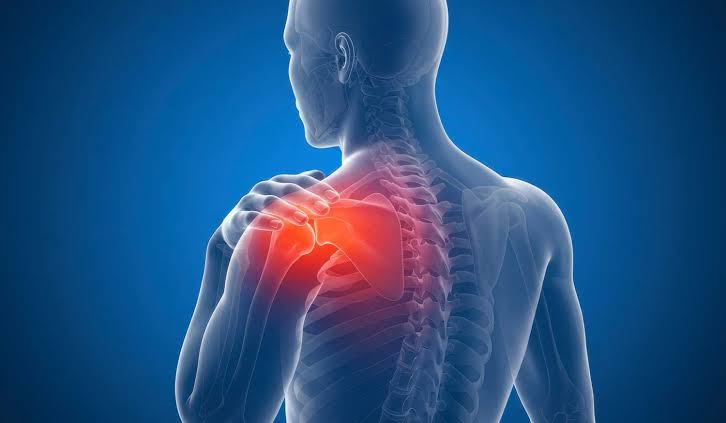
What Is Shoulder Elevation Pain (Subacromial Impingement and Rotator Cuff Pathology)?
Shoulder Joint & Impingement Dynamics
| Aspect | Normal Overhead Movement | Subacromial Impingement |
|---|---|---|
| Subacromial Space | Adequate space around the structures beneath the acromion allows relatively smooth movement of the shoulder. | Irritation or reduced clearance in the subacromial region may contribute to pain during certain shoulder movements. |
| Rotator Cuff Tendon | The rotator cuff helps stabilize the shoulder and supports controlled arm elevation. | The rotator cuff tendons may become irritated or painful with repeated or provocative overhead movements. |
| Movement | The arm can generally be elevated through a comfortable range of motion. | Certain ranges of arm elevation may become painful or restricted. |
| Pain Pattern | Overhead movement is typically comfortable when the shoulder is functioning normally. | Pain may occur during lifting or reaching, particularly through certain portions of the movement. |
| Functional Impact | Everyday reaching and overhead activities can generally be performed without significant discomfort. | Pain may make activities such as reaching overhead, dressing, or lifting more difficult. |
Note: Shoulder pain during overhead movement can have several causes. Subacromial pain or impingement should be assessed by an appropriately qualified healthcare professional rather than diagnosed from symptoms alone.
Understanding Why You Can’t Raise Your Arm Without Shoulder Pain
Shoulder pain during arm elevation is most commonly caused by subacromial impingement syndrome, rotator cuff tendinopathy, subacromial bursitis, or adhesive capsulitis (frozen shoulder). When you lift your arm, the narrow anatomical space beneath the acromion bone compresses inflamed tendons or bursae, generating sharp localized pain and motor weakness.
Because the shoulder is a complex ball-and-socket joint that relies heavily on a balance of muscles, tendons, and ligaments rather than deep bony socket stability, even minor inflammation in the rotator cuff tendons or surrounding bursa can cause significant pain during arm movement.
How Is Interventional Pain Management Different from Standard Care?
When struggling with shoulder pain, many patients find themselves stuck between temporary symptom masking and intimidating surgical procedures. Interventional pain management fills this gap by offering a precise, image-guided middle ground.
Standard Conservative Care
Traditional conservative management usually consists of oral anti-inflammatory medications (NSAIDs), topical pain gels, rest, and generic physical therapy exercises. While resting reduces acute friction, oral medications distribute throughout the entire body rather than targeting the specific compressed tendon or inflamed bursa. Furthermore, attempting heavy physical therapy stretches while a subacromial bursa is severely inflamed can worsen tissue compression and provoke protective muscle spasms.
Traditional Surgical Options
When pain persists, patients are often told that arthroscopic subacromial decompression, rotator cuff repair surgery, or joint manipulation under anesthesia (MUA) are their only remaining choices. Surgical interventions require hospital admission, regional or general anesthesia, surgical incisions, and weeks or months of post-operative arm immobilization in a sling, followed by extensive rehabilitation.
The Interventional Pain Specialty
An interventional pain doctor uses high-resolution diagnostic ultrasound and fluoroscopic guidance to locate the exact point of tissue compression, fluid accumulation, or nerve irritation. Using minimally invasive pinhole techniques, specialists deliver targeted therapies—such as hydrodilatation, subacromial bursa injections, or regenerative therapy (PRP)—directly to the affected tissue. This approach bypasses the risks, downtime, and recovery demands of open surgery while providing significantly more targeted relief than oral medications alone.
How Image-Guided Treatment Works: A Step-by-Step Clinical Protocol
Addressing shoulder elevation pain requires a systematic, medically sound approach to calm acute inflammation, clear fluid buildup, and restore smooth joint mechanics.
1.Step 1: Clinical Assessment & Dynamic Ultrasound Evaluation:Locating the exact point of compression or tissue tearing.
A specialist performs a thorough clinical examination, evaluating your active range of motion and checking for pain signals. Dynamic ultrasound imaging is used to observe tendons and bursae in real time while you lift your arm, pinpointing the exact spot where mechanical pinching occurs.
2.Step 2: Precise Anatomical Mapping & Local Anesthesia:Ensuring patient comfort during the outpatient procedure.
The patient is positioned comfortably in an outpatient procedure suite. Using high-resolution ultrasound, the precise entry path is mapped, and local anesthesia is applied to thoroughly numb the skin and overlying soft tissues.
3.Step 3: Real-Time Guided Micro-Needle Insertion:Placing the micro-needle into the affected tissue space.
Under continuous ultrasound guidance, a specialized micro-needle is gently guided into the target area—such as the subacromial bursa or glenohumeral joint space—avoiding nearby blood vessels, nerves, and healthy tendon fibers.
4.Step 4: Targeted Fluid Delivery or Hydrodilatation:Delivering targeted anti-inflammatory or regenerative therapy.
Depending on the diagnosis, an anti-inflammatory formulation, growth factor mixture (PRP), or sterile saline solution is introduced. This expands compressed joint spaces, flushes out inflammatory markers, or initiates natural soft tissue repair.
5.Step 5: Immediate Post-Procedure Mobility & Guided Rehabilitation:Restoring normal movement patterns without sharp pain.
The needle is removed, and a lightweight dressing is applied. Within hours, pain signals subside, allowing gentle, targeted physical therapy exercises to restore normal arm movement without sharp impingement.
Common Causes Behind Shoulder Elevation Pain
Several distinct clinical conditions can make lifting your arm painful. Identifying the specific underlying cause is essential for choosing the correct treatment strategy.
1. Subacromial Impingement Syndrome
This condition occurs when the tendons of the rotator cuff and the overlying subacromial bursa become compressed within the narrow arch beneath the acromion bone during arm elevation. Pain is typically felt on the outer side of the upper arm, particularly between 60 degrees and 120 degrees of elevation (the classic “painful arc”).
2. Rotator Cuff Tendinopathy or Partial Tears
The rotator cuff consists of four muscles and their tendons (supraspinatus, infraspinatus, teres minor, and subscapularis) that stabilize the shoulder. Repetitive overhead movements, heavy lifting, or age-related degeneration can cause small micro-tears or chronic inflammation, leading to weakness and sharp pain when lifting the arm.
3. Subacromial and Subdeltoid Bursitis
Bursae are small, fluid-filled sacs that cushion tendons as they glide over bones. When repetitive friction or injury causes the bursa to become inflamed and swollen, lifting the arm compresses this delicate structure, causing a deep, throbbing ache that often worsens at night.
4. Adhesive Capsulitis (Frozen Shoulder)
Adhesive capsulitis involves progressive inflammation, thickening, and scar tissue formation within the shoulder joint capsule. It severely restricts both active self-movement and passive movement when someone else tries to lift your arm, making everyday tasks difficult.
5. Bicipital Tendinopathy
The long head of the biceps tendon travels through a groove at the front of the shoulder joint. Inflammation or subluxation of this tendon causes sharp pain localized to the front of the shoulder, especially during lifting, reaching, or pulling movements.
Comparison of Clinical Options for Shoulder Elevation Pain
| Treatment Modality | Underlying Mechanism | Primary Clinical Benefits | Expected Results & Timeline | Ideal Patient Profile |
| Oral Pain Medications & Physical Therapy | Systemic inflammation control & exercise rehab | Non-invasive, widely available | Slow, incremental progress over 8–16 weeks; can be limited by pain | Mild, early-stage muscle strain or mild bursitis |
| Ultrasound-Guided Subacromial Injections | Precise local anti-inflammatory delivery to inflamed bursa | Rapidly reduces local swelling & eliminates pinching pain | Significant pain relief within 24–72 hours; creates window for rehab | Patients with subacromial impingement or acute bursitis |
| Platelet-Rich Plasma (PRP) Therapy | Concentrated autologous growth factors to stimulate repair | Promotes natural healing in damaged tendon fibers | Gradual improvement over 4–8 weeks as tissue repairs | Patients with partial rotator cuff tears or chronic tendinopathy |
| Ultrasound-Guided Hydrodilatation | Fluid expansion of compressed joint capsule | Stretches tight scar tissue from the inside out | Improved joint space and mobility within days to weeks | Patients with frozen shoulder or severe joint capsule restriction |

Who Is Suitable for Interventional Pain Treatments?
Understanding whether you are a suitable candidate for minimally invasive interventional care helps streamline your path to recovery.
You May Be a Candidate If:
- You experience sharp, catching, or aching pain whenever you lift your arm past shoulder height.
- You struggle with simple daily tasks like reaching into a back pocket, styling your hair, or dressing.
- Pain in your shoulder interrupts your sleep, especially when lying on the affected side.
- Standard treatments like rest, pain tablets, or general physiotherapy have provided only temporary or incomplete relief.
- You want to avoid major surgery, prolonged downtime, or long-term medication use.
What to Expect: Before, During, and After Treatment
Knowing what to expect before, during, and after an image-guided procedure helps reduce anxiety and prepares you for a smooth recovery.
Before the Procedure
Your care begins with a comprehensive consultation. Your specialist will perform a dynamic physical examination, assess your range of motion, and review imaging scans (such as ultrasound or MRI). Clear pre-procedure instructions will be provided, including guidance on temporarily pausing blood-thinning medications if necessary.
During the Procedure
- Outpatient Comfort: Procedures are performed in a clean, modern procedure room using local anesthesia for your comfort.
- Continuous Precision: High-definition ultrasound provides real-time visual tracking of the target structure throughout the process.
- Brief Duration: Most targeted injections, nerve blocks, or hydrodilatation procedures take only 15 to 30 minutes to complete.
After the Procedure
- Immediate Recovery: You rest comfortably in a recovery area for 20 to 30 minutes before returning home the same day.
- Rapid Relief: Many patients notice a significant decrease in sharp lifting pain within a few days as local inflammation subsides.
- Rehabilitation Phase: Gentle, structured physical therapy begins within a few days to reinforce smooth, balanced shoulder mechanics.
When Should You Consider Seeing an Interventional Pain Specialist?
If you have been managing chronic pain for more than 6 weeks with limited relief from medication or physiotherapy, a consultation with a fellowship-trained interventional pain specialist is the logical next step. Dr. P. Purohithi at Apollo Hospital, Kondapur, Hyderabad, specialises in precisely diagnosing and treating the source of your pain using image-guided, minimally invasive techniques — without defaulting to surgery.
Holding elite international credentials, including FIPM (Fellowship in Interventional Pain Management) and IDRA, Dr. Purohithi provides expert care at Meraki Pain Management Center. By integrating detailed clinical assessments with dynamic, high-resolution ultrasound evaluations, Dr. Purohithi creates individualized treatment plans designed to calm tissue inflammation, promote natural healing, and help you regain full, pain-free arm movement.
Frequently Asked Questions
Why does my shoulder hurt more when I raise my arm at night?
When you lie down, gravity no longer helps pull the head of your arm bone away from the top of the shoulder joint. This increases pressure within the subacromial space, compressing inflamed bursae or rotator cuff tendons and causing increased pain at night.
How do I know if I need a pain management specialist?
If your shoulder pain persists for more than 4 to 6 weeks, interferes with sleep, or limits your ability to raise your arm despite rest and basic medication, consulting a pain management specialist Hyderabad is recommended to identify the exact cause and start targeted treatment.
Is PRP therapy painful for rotator cuff tears?
PRP therapy involves a simple blood draw followed by a precise injection into the injured tendon under ultrasound guidance. Local anesthesia is used to keep discomfort minimal. While mild, temporary soreness may occur for a few days after the injection, it usually subsides as tissue healing begins.
Can I avoid rotator cuff surgery with non-surgical pain relief?
Many partial-thickness rotator cuff tears, bursitis cases, and impingement syndromes respond very well to non-surgical interventional treatments like ultrasound-guided targeted injections, PRP therapy, and structured physical therapy, helping patients avoid surgery.
How much does a shoulder nerve block or targeted injection cost in Hyderabad?
The cost varies depending on the specific procedure required, whether specialized biological agents like PRP are used, and the clinical setting. A consultation at an established pain clinic Hyderabad provides a clear, detailed cost breakdown tailored to your plan.
What is the difference between a general shoulder injection and an ultrasound-guided injection?
General “blind” injections rely on anatomical landmarks alone, which can sometimes miss the small subacromial space or inflamed tendon sheath. Ultrasound-guided injections allow the interventional pain doctor to see the exact needle location in real time, ensuring medication is delivered precisely where it is needed.
Can I consult Dr. P. Purohithi at Apollo Hospital Kondapur for shoulder pain?
Yes. Dr. P. Purohithi evaluates complex shoulder disorders and provides advanced, non-surgical interventional care at Meraki Pain Management Center, located within Apollo Hospital, Kondapur, Hyderabad.
Reclaim Pain-Free Movement and Daily Comfort
Finding an answer to the question “why can’t I raise my arm without shoulder pain” is the key to unlocking lasting relief. You do not have to accept persistent stiffness, sleepless nights, or progressive loss of mobility as an inevitable part of life.
If you are looking for an accurate diagnosis and effective non-surgical treatment options in Hyderabad, Dr. P. Purohithi at Meraki Pain Management Center (Apollo Hospital, Kondapur) offers specialized, image-guided care tailored to your needs.




Leave a Comment