
Table of Contents
What Causes Lower Back Pain in Adults? A Comprehensive Non-Surgical Guide
Understanding what causes lower back pain in adults is often the first vital step toward recovering comfort and restoring daily productivity. Whether you are a desk worker sitting through eight hours of back-to-back virtual meetings, a busy parent lifting heavy household items, or an active individual noticing stiffness every morning, lumbar spine discomfort can disrupt your life unexpectedly.
Determining what causes lower back pain in adults requires looking beyond temporary muscular strain to examine the intricate framework of bones, discs, nerves, and ligaments that support the lower spine. While back pain is one of the leading causes of physical disability worldwide, experiencing persistent aching or sharp radiation does not mean you are destined for open spinal surgery or endless courses of painkillers. Modern pain medicine now offers precise, image-guided interventional procedures that accurately pinpoint and treat the root cause of spinal discomfort.
Living with persistent back stiffness can feel overwhelming, but you do not have to manage it alone. By learning how lumbar conditions develop, exploring state-of-the-art diagnostic protocols, and understanding when to consult an experienced specialist, you can take control of your spinal health and return to a life of active movement.

What Is Interventional Diagnostic Evaluation for Lower Back Pain?
+-----------------------------------------------------------------------------+
|                     SNIPPET DEFINITION & DIRECT ANSWER                      |
|                                                                             |
| Interventional diagnostic evaluation for lower back pain uses precise,      |
| image-guided diagnostic nerve blocks and clinical mapping to identify the    |
| exact anatomical source of lumbar discomfort—such as herniated discs,       |
| facet joint arthritis, or sacroiliac dysfunction—enabling non-surgical,     |
| targeted treatment.                                                         |
+-----------------------------------------------------------------------------+
Interventional pain medicine aligns with clinical guidelines established by global and national pain authorities, including the International Association for the Study of Pain (IASP) and the Indian Society for the Study of Pain (ISSP). Its core objective is to move beyond empirical symptom suppression, identifying specific pain generators within the lumbar spine to deliver precise, non-surgical relief.
How Is Interventional Spine Care Different from Standard Back Treatments?
When adults seek care for lower back pain, traditional healthcare pathways often present two distinct extremes: routine oral medications or invasive spine surgery. Interventional pain care offers a precise, effective middle pathway:
- Conventional Medical Management: Over-the-counter pain relievers and muscle relaxants can calm acute muscle spasms. However, long-term dependence on oral anti-inflammatories or neuropathic pills can lead to side effects like stomach ulcers, kidney stress, or persistent drowsiness, without addressing structural nerve compression or joint arthritis.
- Open Spine Surgery: Major procedures like lumbar discectomy or spinal fusion involve cutting tissue, placing hardware, and undergoing significant rehabilitation under general anesthesia. While crucial for severe structural instabilities, surgery carries inherent risks and extended recovery times that may not be necessary for every patient.
- Interventional Non-Surgical Care: Utilizes real-time fluoroscopic X-ray or ultrasound guidance to target the exact nerve or joint causing pain. Techniques such as transforaminal epidural injections, facet joint nerve blocks, or radiofrequency ablation deliver focused relief directly to the affected tissue, allowing patients to recover quickly without hospital stays.
How Interventional Diagnostic and Relief Mapping Works: Step-by-Step
To understand what causes lower back pain in adults and how modern non-surgical interventions resolve it, it helps to look at the structured clinical care pathway:
1.1. Comprehensive Clinical Assessment & Imaging Review:Connecting physical symptoms with MRI and X-ray findings.
A pain specialist examines your movement patterns, checks nerve reflexes, and analyzes high-resolution MRI or CT scans to identify potential structural abnormalities in the lumbar spine.
2.2. Image-Guided Diagnostic Block:Targeted local numbing confirms the primary pain generator.
Using real-time fluoroscopy, a precise dose of local anesthetic is placed near the suspected nerve root or facet joint. Immediate, temporary relief confirms the exact anatomical source of your back pain.
3.3. Target-Specific Therapeutic Procedure:Millimeter-precise placement calms nerve inflammation.
Once the pain source is confirmed, targeted treatments—such as transforaminal epidural steroid injections, facet joint radiofrequency ablation (RFA), or sacroiliac joint injections—are performed directly at the site.
4.4. Localized Inflammatory and Pain Signal Suppression:Reducing neuro-inflammation stops pain signals at the source.
The procedure calms local tissue swelling or thermally alters sensory nerve fibers, preventing pain signals from reaching the brain while preserving motor strength and sensory function.
5.5. Functional Core Rehabilitation:Reduced pain allows effective physical rehabilitation.
With sharp back pain controlled, patients can comfortably engage in physical therapy to strengthen deep core muscles, restore spinal flexibility, and prevent future recurrences.
Key Causes of Lower Back Pain in Adults and Non-Surgical Options
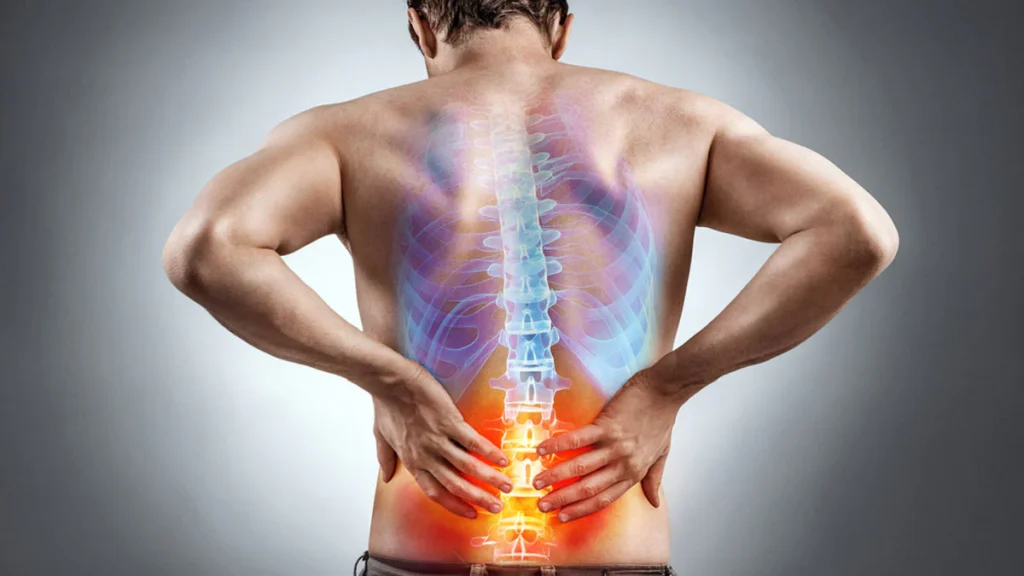
Because the lumbar spine carries most of the body’s weight, multiple structures can cause discomfort. The table below outlines common primary causes and their corresponding interventional treatments:
| Anatomical Cause | Common Symptoms | Primary Interventional Treatment | Typical Relief Duration | Key Patient Advantage |
| Lumbar Disc Herniation / Bulge | Sharp, shooting pain radiating down one leg (sciatica), tingles, or numbness. | Fluoroscopic Transforaminal Epidural Steroid Injection | Typically 3 to 12 months; aids natural disc healing | Calms nerve root swelling directly, avoiding surgical disc removal in most cases. |
| Facet Joint Osteoarthritis | Dull, aching low back pain, worse when leaning backward or twisting. | Medial Branch Blocks & Radiofrequency Ablation (RFA) | Typically 6 to 18 months; repeatable as needed | Deactivates pain-transmitting nerves around the joint without changing spine structure. |
| Sacroiliac (SI) Joint Dysfunction | One-sided low back pain radiating into the buttock, thigh, or groin. | Image-Guided Sacroiliac Joint Injection / SI Joint RFA | Clinical experience suggests 6 to 12 months | Targets the misaligned or inflamed pelvic-spinal junction accurately under guidance. |
| Lumbar Spinal Stenosis | Heavy, aching legs or back pain while walking that relieves upon bending forward. | Lumbar Epidural Injection & MILD (Minimally Invasive Procedures) | Typically 3 to 9 months; improves walking distance | Decreases central canal inflammation, helping older adults walk longer without leg pain. |
Who Is Suitable for Interventional Back Care?
Interventional treatments are engineered to help adults regain daily function safely and effectively. You may be an ideal candidate for non-surgical interventional spine care if:
- Persistent Pain Over 4–6 Weeks: Your low back or leg pain continues despite resting, modifying activities, or completing basic physical therapy.
- You Suffer from Sciatica or Nerve Pain: Pain radiates down your buttock, thigh, or calf, making standing or sitting for long periods unbearable.
- You Want to Avoid Open Spine Surgery: You have been advised to explore options for disc bulges or joint arthritis but prefer minimally invasive approaches first.
- Oral Painkillers Cause Discomfort: You experience acid reflux, stomach irritation, or elevated blood pressure from taking daily anti-inflammatory medications.
- Post-Surgical Back Pain Continues: You have previously undergone spinal surgery but continue to experience localized back or leg pain.
What to Expect During Procedure and Recovery
Exploring interventional care for low back pain is simple, transparent, and designed with patient comfort in mind:
Clinical Evaluation (Before Procedure)
Your specialist evaluates your physical posture, reviews your spinal imaging, and explains the planned procedure step-by-step to address any concerns.
The Interventional Procedure (During Procedure)
All interventional spine procedures are performed on an outpatient basis using local anesthesia. guided by live X-ray (fluoroscopy) or high-resolution ultrasound, your physician guides specialized needles to the exact anatomical target with millimeter precision. The entire process generally takes 20 to 30 minutes, with minimal discomfort.
Recovery and Activity (After Procedure)
Because these treatments are non-surgical, there are no incisions or stitches. After a short 30-minute observation period, you can return home the same day. Most patients resume routine light activities within 24 to 48 hours, with significant pain relief developing over the following days.
When Should You Consider Seeing an Interventional Pain Specialist?
If you have been managing chronic pain for more than 6 weeks with limited relief from medication or physiotherapy, a consultation with a fellowship-trained interventional pain specialist is the logical next step.
In Hyderabad, Dr. P. Purohithi at Meraki Pain Management Center, located within Apollo Hospital, Kondapur, specializes in precisely diagnosing and treating the source of your pain using image-guided, minimally invasive techniques—without defaulting to surgery.
Holding advanced international credentials, including a Fellowship in Interventional Pain Management (FIPM) and specialization in In-plane Ultrasound-Guided Regional Anesthesia (IDRA), Dr. Purohithi focuses on non-surgical spine preservation and targeted nerve care. Seeking care at Apollo Hospital, Kondapur gives patients access to advanced diagnostic imaging and clinical infrastructure in a modern, convenient environment.
Frequently Asked Questions
What is the most common cause of lower back pain in young and middle-aged adults?
In young and middle-aged adults, lower back pain is most commonly caused by lumbar disc herniation, muscle strains from poor posture, or ligamentous strain. Lumbar disc bulges can compress spinal nerve roots, leading to classic sciatic leg pain.
How do I know if my lower back pain is coming from a nerve or a muscle?
Muscular pain usually feels like a dull, localized ache or tightness that worsens with movement and improves with rest. Nerve pain, by contrast, often causes sharp, electric, or burning sensations that shoot down into the buttock, leg, or foot, sometimes accompanied by tingling or numbness.
Are epidural steroid injections safe for treating lower back pain?
Yes. When performed by a fellowship-trained interventional pain specialist using live fluoroscopic guidance, transforaminal epidural injections are safe and precise. Guidance ensures the medication is placed exactly at the inflamed nerve root while avoiding surrounding blood vessels.
How long does radiofrequency ablation (RFA) last for chronic lower back pain?
Radiofrequency ablation for lumbar facet joint pain typically provides relief for 6 to 18 months. As the tiny sensory nerve fibers slowly regenerate over time, the procedure can be safely repeated to maintain long-term pain relief.
Can interventional procedures help me avoid lower back surgery?
In many cases, yes. By accurately treating nerve inflammation or facet joint pain with targeted injections or RFA, interventional procedures can control symptoms effectively, allowing many patients to avoid or postpone open spinal surgery.
How much does an epidural steroid injection cost in Hyderabad?
The cost of an interventional spine procedure varies depending on whether it involves a single nerve level, bilateral facet joints, or radiofrequency ablation. Detailed, transparent pricing is provided following your comprehensive clinical consultation at Meraki Pain Management Center.
How quickly can I return to work after an interventional back procedure?
Because interventional procedures are minimally invasive and performed under local anesthesia, most patients return to light desk work and regular daily routines within 24 to 48 hours following treatment.
How do I book an appointment with a pain management specialist in Kondapur?
You can schedule a diagnostic consultation with Dr. P. Purohithi at Meraki Pain Management Center, Apollo Hospital, Kondapur, by calling +91 88856 23283 or visiting https://drpurohithi.com/.

Take the First Step Toward a Pain-Free Spine
Understanding what causes lower back pain in adults is the key to choosing a targeted, lasting recovery path. You do not have to accept persistent back stiffness or rely indefinitely on daily painkillers.
If you are seeking expert non-surgical back pain treatment in Hyderabad, Dr. P. Purohithi at Apollo Hospital, Kondapur, offers a comprehensive diagnostic consultation to identify the exact source of your pain before recommending a personalized treatment plan.


Leave a Comment