
Table of Contents
Can Bad Posture Cause Occipital Neuralgia? Mechanics, Symptoms, and Non-Surgical Relief
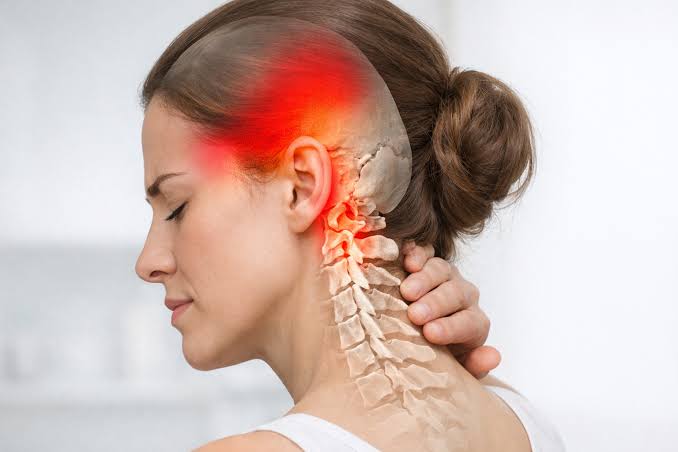
If you spend hours hunched over a laptop, tilting your head down at a smartphone, or sitting at a desk, only to be met with intense, electric shock-like shooting pain from the base of your neck up into your scalp, you are likely asking: can bad posture cause occipital neuralgia?
In tech-heavy employment hubs like Hyderabad, IT professionals, corporate executives, and remote workers frequently endure persistent neck tightness and sharp headaches. When daily slouching shifts your head forward, the mechanical strain placed on the upper cervical spine can irritate delicate nerves at the base of the skull.
While posture-induced nerve pain can feel overwhelming, understanding how forward head posture compresses these occipital pathways empowers you to seek accurate diagnostic evaluation and targeted, non-surgical pain relief rather than relying indefinitely on daily pain tablets or fearing major surgery.
What Is Occipital Neuralgia?
Forward Head Posture & Occipital Nerve Compression
Neutral Head Alignment
Ears positioned over the shoulders
- The head remains in a more neutral position.
- Suboccipital muscles can remain relatively relaxed and flexible.
- The occipital nerves have adequate space to move freely.
- Normal nerve signaling is maintained without mechanical pressure.
Typical result: No nerve-related throbbing, electric-shock sensations, or scalp pain caused by this mechanical pattern.
Forward Head Posture (“Tech Neck”)
Head positioned forward relative to the shoulders
- Prolonged forward positioning can increase the workload on the muscles at the base of the skull.
- Tight or overactive suboccipital muscles may contribute to local pressure and irritation around the occipital region.
- This may affect the surrounding tissues and, in some cases, contribute to symptoms associated with occipital nerve irritation.
- Some people may experience pain that feels sharp, shooting, burning, or electric and may extend from the back of the head toward the scalp.
Possible symptom pattern: Scalp sensitivity, localized pain, throbbing, or electric-shock-like sensations.
Key Difference
Neutral alignment → Ears remain closer to the shoulder line, reducing unnecessary strain around the upper neck.
Forward head posture → The head shifts forward, potentially increasing muscular demand around the upper cervical and suboccipital region.
Important: Forward head posture does not automatically mean that an occipital nerve is being compressed. Similar symptoms can have multiple causes, so persistent or severe pain should be evaluated by an appropriate healthcare professional.
Understanding How Posture Triggers Occipital Neuralgia
Direct Answer: Yes, bad posture can cause occipital neuralgia. Forward head posture (“tech neck”) causes chronic contraction of the suboccipital muscles at the base of the skull. This tight muscle tissue compresses and traps the greater and lesser occipital nerves, triggering sharp, stabbing, or burning electric-shock pain that radiates upward across the scalp.
According to clinical criteria established by the International Association for the Study of Pain (IASP), neuropathic pain originating from the C2 and C3 nerve roots manifests as paroxysmal shooting or throb-like pain. When postural misalignment persists, chronic muscle guarding turns temporary neck strain into ongoing nerve entrapment.
How Is Interventional Pain Management Different from Standard Care?
When searching for answers regarding neck headaches, patients often get caught between temporary fixes and unnecessary fear of complex cervical spine operations. Interventional pain medicine bridges this gap with targeted, image-guided care.
Standard Conservative Care
Standard conservative management usually relies on muscle relaxants, oral nonsteroidal anti-inflammatory drugs (NSAIDs), heating pads, and general neck massages. While massage therapy or hot compresses may temporarily relax surface muscles, they cannot free a deeply entrapped, inflamed occipital nerve or calm hyperactive pain signal pathways. Relying solely on oral medications risks systemic side effects like stomach irritation, liver strain, or morning brain fog without resolving physical nerve compression.
Traditional Surgical Interventions
When pain persists, patients are sometimes told that invasive procedures—such as surgical nerve decompression, occipital nerve division, or cervical spinal fusion—are the next steps. Open surgical procedures require hospital admissions, general anesthesia, incisions through neck musculature, and long recovery periods, carrying inherent risks like permanent scar formation or adjacent segment degeneration.
The Interventional Pain Specialty
An interventional pain doctor uses high-resolution diagnostic ultrasound or fluoroscopy to visualize the suboutcrop region and locate precise nerve channels in real time. Using minimally invasive pinhole techniques, specialists perform targeted procedures such as ultrasound-guided occipital nerve blocks, nerve hydrodissection, or radiofrequency ablation (RFA). These outpatient therapies break up scar adhesions and quiet hyperactive pain signals directly at the source, offering rapid relief without open surgery.
How Image-Guided Interventional Relief Works: A Step-by-Step Clinical Protocol
Resolving posture-induced occipital nerve entrapment requires a methodical approach to confirm the nerve source, reduce local swelling, and free trapped nerve tissue.
1.Step 1: Clinical Mapping & High-Resolution Ultrasound Diagnostic:Distinguishing occipital neuralgia from cervicogenic headache or migraine.
A specialist performs a physical evaluation testing suboccipital tenderness (Tinel’s sign over the occipital nerve path) and neck movement. High-resolution ultrasound visualizes the greater occipital nerve as it passes through the suboccipital muscles, assessing for compression or local swelling.
2.Step 2: Diagnostic Image-Guided Local Block:Confirming the primary nerve generator with pinpoint precision.
Under real-time ultrasound guidance, a small volume of fast-acting local anesthetic is placed adjacent to the greater or lesser occipital nerve. Immediate pain reduction within minutes confirms the exact nerve source, providing diagnostic clarity.
3.Step 3: Precise Micro-Cannula Placement & Local Anesthesia:Ensuring complete patient comfort during outpatient treatment.
Local anesthesia is applied to thoroughly numb the skin at the base of the skull. A specialized micro-cannula is guided precisely toward the compressed nerve sheath while avoiding adjacent cervical arteries.
4.Step 4: Ultrasound-Guided Nerve Hydrodissection & Anti-Inflammatory Delivery:Releasing trapped nerve tissue using targeted fluid expansion.
A sterile solution containing a mild anti-inflammatory agent, local anesthetic, or normal saline is introduced. The fluid gently separates tight suboccipital muscle fibers and scar tissue from the nerve trunk, relieving physical compression.
5.Step 5: Postural Rehabilitation & Long-Term Neuromodulation:Interrupting chronic pain loops to enable ergonomic postural retraining.
With sharp nerve pain quieted, targeted physical therapy restores upper back and deep neck flexor strength. If pain recurs, long-term options like pulsed radiofrequency (PRF) can be used to calm nerve activity for months.
Clinical Symptoms: Is Your Bad Posture Triggering Nerve Pain?
Occipital neuralgia produces distinct symptoms that differentiate it from tension headaches or migraines, though bad posture can contribute to both.
Key Symptoms of Occipital Neuralgia:
- Shooting or Stabbing Scalp Pain: Sharp, electric-shock sensations starting at the upper neck/base of the skull and radiating up one side of the head toward the crown.
- Scalp Tenderness (Allodynia): Pain triggered by light touch, such as brushing your hair, resting your head on a pillow, or wearing a hat.
- Pain Behind the Eye: A deep, throbbing ache localized behind or around one eye, following the path of the greater occipital nerve.
- Sensitivity to Light and Neck Motion: Sharp pain flares triggered by turning your neck, looking up at a screen, or being in bright environments.
Comparison of Treatment Options for Occipital Neuralgia
| Treatment Option | Primary Target / Mechanism | Clinical Benefits | Expected Relief & Timeline | Ideal Patient Profile |
| Oral Pain Tablets & Physical Therapy | Systemic muscle relaxation & muscle strengthening | Non-invasive, widely accessible | Gradual relief over 6–12 weeks; can be limited by active nerve pain | Mild, intermittent muscle tightness without severe electric shock pain |
| Ultrasound-Guided Occipital Nerve Block | Direct local anesthetic & anti-inflammatory delivery to nerve | Rapid reduction in local nerve swelling & scalp pain | Fast relief within 24–48 hours; typically lasts weeks to months | Patients experiencing severe scalp tenderness or sharp shooting pain |
| Ultrasound Nerve Hydrodissection | Fluid expansion to separate trapped nerve from tight muscle | Physically frees entrapped nerve tissue from muscle fascia | Noticeable reduction in nerve tension within days; long-lasting | Patients with chronic forward head posture and mechanical nerve trapping |
| Pulsed Radiofrequency (PRF) | Delivers controlled electrical pulses to modulate nerve signals | Long-term pain relief without damaging nerve tissue | Typically provides relief for 6 to 18 months; repeatable | Refractory cases requiring extended pain relief to allow posture rehab |
Who Is Suitable for Interventional Pain Treatment?
Understanding whether you are a good candidate for non-surgical interventional care helps simplify your treatment decisions.
You May Be a Candidate If:
- You experience sharp, shooting pain radiating from the base of your neck up into your scalp after prolonged computer or smartphone use.
- Touching your hair, wearing a cap, or resting your head on a pillow causes uncomfortable scalp sensitivity.
- Muscle relaxants, daily anti-inflammatories, or massage therapy have yielded only temporary relief.
- Pain prevents you from engaging in neck-strengthening physical therapy or posture retraining exercises.
- You want to avoid invasive surgical nerve release or long-term medication dependence.
What to Expect: Before, During, and After Procedure
Knowing what happens during an image-guided interventional procedure helps reduce anxiety and prepares you for a smooth recovery.
Before the Procedure
Your care begins with a comprehensive consultation. Your specialist will perform a physical examination, check for suboccipital nerve tenderness, and review neck MRI or ultrasound scans to rule out cervical disc disease. Clear pre-procedure guidelines will be provided.
During the Procedure
- Outpatient Comfort: Procedures are performed in a clean, modern procedure suite under local anesthesia.
- Continuous Imaging: High-resolution ultrasound provides real-time visual tracking of the needle and occipital nerve throughout the process.
- Brief Duration: Most targeted nerve blocks or hydrodissection procedures take between 15 and 30 minutes.
After the Procedure
- Immediate Recovery: You rest comfortably in a recovery area for 20 to 30 minutes before returning home the same day.
- Rapid Symptom Relief: Many patients notice a significant reduction in sharp scalp pain and neck tightness within 24 to 48 hours.
- Rehabilitation Phase: Gentle posture retraining and ergonomic workplace adjustments begin shortly after to prevent muscle tightness from returning.
When Should You Consider Seeing an Interventional Pain Specialist?
If you have been managing chronic pain for more than 6 weeks with limited relief from medication or physiotherapy, a consultation with a fellowship-trained interventional pain specialist is the logical next step. Dr. P. Purohithi at Apollo Hospital, Kondapur, Hyderabad, specialises in precisely diagnosing and treating the source of your pain using image-guided, minimally invasive techniques — without defaulting to surgery.
Holding prestigious international qualifications, including FIPM (Fellowship in Interventional Pain Management) and IDRA, Dr. Purohithi offers expert care at Meraki Pain Management Center. By combining detailed physical assessments with dynamic, high-resolution ultrasound evaluations, Dr. Purohithi creates individualized treatment plans designed to free trapped nerves, calm scalp tenderness, and help you return to comfortable daily work.
Frequently Asked Questions
Can bad posture permanently damage the occipital nerves?
Occipital nerves are resilient. While prolonged forward head posture causes chronic irritation, inflammation, and compression, targeted interventional treatment combined with posture retraining typically allows the nerve to recover without permanent damage.
How do I know if I need a pain management specialist?
If severe scalp pain, electric shock sensations, or neck headaches persist for more than 4 to 6 weeks despite rest, massage, or basic medications, consulting a pain management specialist Hyderabad is recommended for a precise diagnosis and targeted care plan.
Is an ultrasound-guided occipital nerve block safe?
When performed by a qualified specialist using real-time ultrasound, occipital nerve blocks are safe and effective. Real-time visualization ensures the medicine is placed accurately around the nerve while protecting adjacent cervical blood vessels.
How long does radiofrequency ablation (RFA) last for occipital neuralgia?
Pulsed radiofrequency (PRF) for the occipital nerves typically provides relief for 6 to 18 months. Because it modulates nerve signal transmission without destroying nerve tissue, the procedure can be safely repeated if symptoms eventually return.
Can an occipital nerve block help me avoid neck surgery?
Yes. Clinical experience shows that ultrasound-guided nerve blocks, nerve hydrodissection, and pulsed radiofrequency successfully resolve posture-induced occipital pain in over 85% of cases, helping patients avoid invasive surgical interventions.
How much does an occipital nerve block cost in Hyderabad?
The cost depends on whether diagnostic or therapeutic blocks are performed, whether ultrasound guidance is utilized, and the setting. A consultation at an established pain clinic Hyderabad provides a clear, transparent fee structure.
Can I consult Dr. P. Purohithi at Apollo Hospital Kondapur for a second opinion on neck headaches?
Yes. Dr. P. Purohithi evaluates complex headache and neck pain disorders and performs advanced image-guided non-surgical treatments at Meraki Pain Management Center, located within Apollo Hospital, Kondapur, Hyderabad.
Reclaim Daily Focus and Relief from Scalp Pain
Finding an answer to whether bad posture can cause occipital neuralgia is the first step toward lasting relief. You do not have to accept persistent scalp shocks, neck tightness, or work-disrupting headaches as an unavoidable consequence of desk work.
If you are seeking a second opinion or exploring non-surgical treatment options in Hyderabad, Dr. P. Purohithi at Meraki Pain Management Center (Apollo Hospital, Kondapur) offers comprehensive evaluations and image-guided care tailored to your needs.


Leave a Comment