
Table of Contents
How Much Does RFA Treatment Cost in Hyderabad? Procedure Details, Value, and Non-Surgical Relief
If you are exploring long-term relief for persistent back, neck, or joint pain, understanding how much does RFA treatment cost is a practical and essential first step. Radiofrequency ablation (RFA) has become one of the most effective non-surgical interventions for chronic joint and nerve pain, but navigating healthcare expenses can feel overwhelming when you are already dealing with daily discomfort.
In major medical hubs like Hyderabad, patients frequently seek clarity on the financial investment required for specialized pain management. Whether you are an IT professional suffering from severe facet joint neck pain, a senior attempting to avoid knee replacement surgery, or a desk-worker managing chronic lower back aching, evaluating the cost of treatment involves looking at the technology, procedural precision, and long-term quality of life benefits.
Understanding how RFA works, what influences its overall pricing, and how it compares to alternative treatments helps you make informed, confident decisions about your health and financial planning.
What Is Radiofrequency Ablation (RFA)?
+--------------------------------------------------------------------------+
|                     RADIOFREQUENCY ABLATION MECHANISM                    |
+--------------------------------------------------------------------------+
|                                                                          |
|       INFLAMED FACET / KNEE JOINT           TARGETED THERMAL ENERGY      |
|                                                                          |
|             \   /                                   \   /                |
|             (o o)                                   (o o)                |
|               |                                       |                  |
|             // \\                                   //  \\               |
|            //   \\                                 //    \\              |
|           [Sensory]                               [Sensory]              |
|            [ Nerves]                               [ Nerves]             |
|               |                                       /                  |
|               |                                      /                   |
|        Continuous Pain                        Interrupted Signal         |
|         Transmissions                           (6–18 Months)            |
|                                                                          |
|     Sensory nerves send pain               Gentle heat creates a tiny    |
|     signals to the brain.                  lesion to interrupt signals.  |
+--------------------------------------------------------------------------+
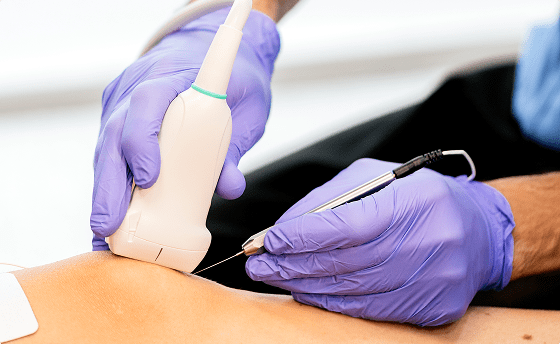
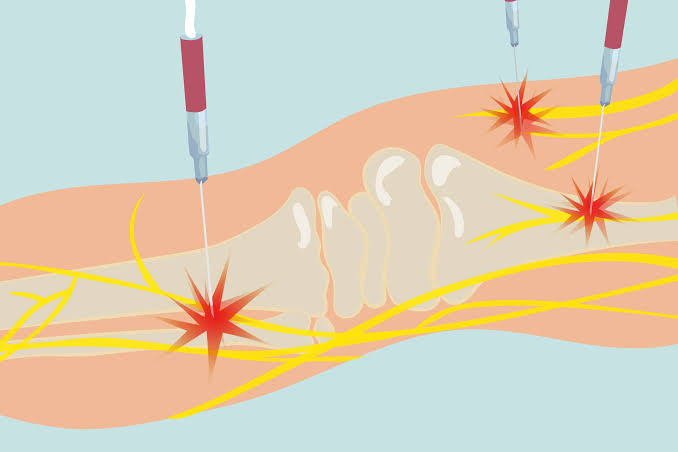
Radiofrequency ablation (RFA) is a minimally invasive, image-guided procedure that uses radiofrequency energy to apply targeted heat to specific sensory nerves, temporarily interrupting their ability to send pain signals to the brain. In India, RFA treatment costs typically range from ₹35,000 to ₹95,000 per region, depending on the anatomical location, number of nerves treated, specialized cannulas used, and hospital setting.
By focusing purely on sensory nerve pathways, RFA leaves motor function and overall structural integrity completely intact, providing significant, long-lasting relief without open surgical incisions.
How Is Interventional Pain Management Different from Standard Care?
When chronic back, neck, or knee pain interferes with daily life, patients are often caught between taking daily prescription medications or considering invasive open surgery. Interventional pain management offers a precise, non-surgical alternative between these two ends of the spectrum.
Standard Conservative Care
Standard conservative care relies primarily on oral anti-inflammatory drugs, muscle relaxants, pain gels, and basic physical therapy. While helpful during early or mild flare-ups, long-term reliance on oral medications can cause gastrointestinal, renal, or cardiovascular side effects. Furthermore, systemic medications travel through the entire body rather than directly treating the specific, worn facet joint or osteoarthritic knee nerve. If the pain generator remains chronically inflamed, medication offers only temporary masking rather than structural quiet.
Traditional Surgical Interventions
Surgical procedures—such as spinal fusion, laminectomy, or total joint replacement—involve operating directly on bones, ligaments, and major structures under general anesthesia. While essential for severe structural instability, advanced deformity, or progressive nerve deficits, surgery requires significant tissue disruption, hospital stays, and lengthy rehabilitation periods. Surgery also carries higher baseline costs and inherent risks, such as scar tissue formation or post-surgical stiffness.
The Interventional Pain Specialty
An interventional pain doctor uses precision pinhole techniques to treat the exact source of pain. Guided by real-time fluoroscopy (X-ray) or high-definition ultrasound, specialized radiofrequency micro-cannulas are positioned directly adjacent to sensory nerve branches. This targeted approach calms pain signals at their source, requires no major surgical incisions, and allows most patients to return home the same day.
How RFA Treatment Works: A Step-by-Step Clinical Procedure
Understanding the step-by-step process of radiofrequency ablation can alleviate anxiety and clarify what you are investing in for your health.
1.Step 1: Diagnostic Mapping (Medial Branch or Genicular Block):Confirming the exact pain-generating nerve pathways.
Before performing RFA, a diagnostic nerve block is administered. A small amount of local anesthetic is precisely injected near the target sensory nerves. If this temporary block provides significant, short-term relief, it confirms that those specific nerves are responsible for your pain, ensuring RFA will be effective.
2.Step 2: Local Anesthesia & Outpatient Preparation:Ensuring complete patient comfort throughout the procedure.
On the day of the procedure, you are brought to a specialized day-care procedure suite. Local anesthesia is applied to numb the skin and deeper tissues, keeping you comfortable and awake throughout the process.
3.Step 3: Image-Guided Needle Placement:Navigating micro-cannulas with millimeter precision.
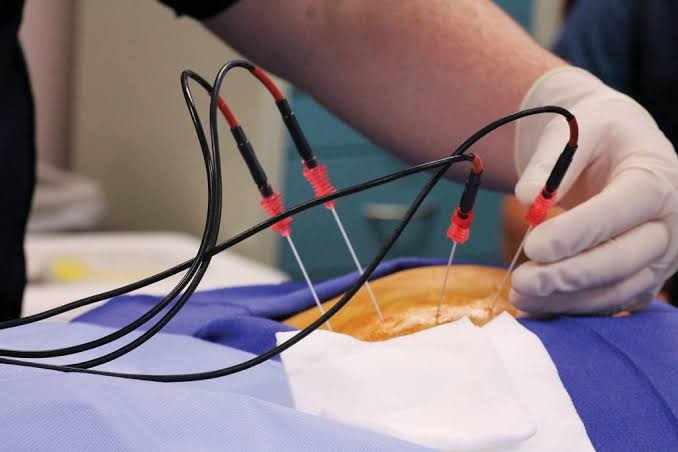
Using real-time fluoroscopic (X-ray) or ultrasound guidance, the pain specialist advances specialized radiofrequency cannulas to the exact location of the target sensory nerves. Real-time imaging ensures absolute safety and millimeter-level accuracy.
4.Step 4: Sensory and Motor Nerve Stimulation Testing:Verifying sensory localization away from motor nerve roots.
Gentle electrical impulses are passed through the cannula tip. Sensory stimulation confirms that the electrode is positioned directly against the pain-transmitting nerve, while motor stimulation verifies that motor nerves controlling muscle movement are safely out of range.
5.Step 5: Controlled Radiofrequency Lesioning:Applying targeted thermal energy to quiet pain transmission.
Once positioning is verified, radiofrequency energy is applied for 60 to 90 seconds, heating the nerve tissue to a controlled temperature (typically 70°C–80°C for conventional RFA or 42°C for pulsed RFA). This creates a precise heat lesion that stops the nerve from transmitting pain signals.
Factors Influencing RFA Treatment Costs and Procedural Variations
When evaluating how much does RFA treatment cost, it is important to realize that pricing varies based on the underlying condition, anatomical area, equipment requirements, and technique used.
Key Cost Factors:
- Anatomical Region & Number of Nerves: Treating a single level of lumbar facet joints involves fewer sensory branches than treating bilateral knee joints or multi-level cervical spine segments.
- Type of RFA Technology: Standard thermal RFA, cooled RFA (which creates larger treatment lesions), and pulsed RFA (which uses electrical fields rather than high heat) utilize different specialized single-use electrodes and equipment, influencing overall cost.
- Facility Infrastructure: Procedures performed in advanced, sterile day-care operation theaters equipped with high-end fluoroscopy suites carry facility fees that reflect high safety standards and sterile protocols.
- Diagnostic Pre-Testing: The overall cost includes the diagnostic nerve blocks performed prior to the ablation step to ensure optimal diagnostic accuracy.
Comparison of Pain Relief Interventions
| Procedure / Treatment | Primary Target | Mechanism of Action | Typical Relief Duration | Cost Structure & Relative Investment |
| Oral Pain Medications & Physiotherapy | Systemic response / muscular rehabilitation | Temporary anti-inflammatory suppression & muscular conditioning | Hours to days (requires continuous use) | Low initial cost; recurring long-term expenses for prescriptions & maintenance therapy |
| Epidural Steroid Injections (ESI) | Inflamed spinal epidural space & nerve roots | Fluoroscopy-guided anti-inflammatory steroid delivery | 3 to 12 months | Moderate cost per injection; ideal for acute disc herniation or radiculopathy |
| Radiofrequency Ablation (RFA) | Sensory nerves supplying facet joints or knees | Targeted thermal disruption of pain signal transmission | 6 to 18+ months | Moderate-to-high single-procedure investment; high long-term value due to extended duration of relief |
| Open Joint Replacement / Spine Fusion | Major structural bones, cartilage, and joints | Surgical removal, reconstruction, or fusion of bone and joint structures | Multi-year / Permanent structural change | High investment; includes major surgery fees, extended hospital stay, implants, and prolonged rehab |
Who Is Suitable for Radiofrequency Ablation?
Determining whether you are a suitable candidate for radiofrequency ablation involves a combination of clinical evaluation, imaging review, and diagnostic testing.
You May Be a Candidate If:
- You suffer from chronic lower back, neck, or knee pain that has lasted longer than 3 months.
- You received significant, temporary pain relief (50% or more) from a diagnostic nerve block or medial branch block.
- Your pain stems from facet joint arthritis, spondylosis, failed back surgery syndrome, or advanced knee osteoarthritis where surgery is not preferred or medically advisable.
- Conservative measures like oral medications, rest, and basic physical therapy no longer provide adequate relief.
- You want to reduce your dependency on daily pain medications or delay/avoid major open surgery.
What to Expect: Before, During, and After RFA Treatment
Knowing what to expect at each stage of RFA treatment ensures a comfortable, stress-free experience.
Before the Procedure
Your specialist will review your medical history, current medications, and diagnostic imaging (MRI or X-ray). You will undergo a diagnostic nerve block to confirm the exact nerves causing your pain. On the day of your RFA, you will be advised to fast for a few hours prior to the appointment if mild sedation is used.
During the Procedure
- Outpatient Comfort: You will lie comfortably on an X-ray table. Local anesthesia is administered to completely numb the entry site.
- Precision and Safety: Real-time fluoroscopic guidance allows the physician to place electrodes with extreme accuracy. Nerve testing is conducted to double-check position safety.
- Duration: The procedure typically takes between 30 and 60 minutes depending on the number of areas being treated.
After the Procedure
- Immediate Recovery: You will spend 30 to 60 minutes in a recovery lounge before being cleared to go home the same day.
- Short-Term Tenderness: You may experience mild localized soreness or sunburn-like sensitivity near the injection sites for 2 to 5 days as the treated tissues settle.
- Results Timeline: Pain relief typically begins to develop within 1 to 3 weeks as local post-procedure inflammation subsides, reaching peak relief by 4 to 6 weeks and lasting anywhere from 6 to 18 months or longer.
When Should You Consider Seeing an Interventional Pain Specialist?
If you have been managing chronic pain for more than 6 weeks with limited relief from medication or physiotherapy, a consultation with a fellowship-trained interventional pain specialist is the logical next step.
Dr. P. Purohithi at Apollo Hospital, Kondapur, Hyderabad, specializes in precisely diagnosing and treating the source of your pain using image-guided, minimally invasive techniques—without defaulting to surgery. Holding prestigious international qualifications including FIPM (Fellowship in Interventional Pain Management) and IDRA, Dr. Purohithi provides expert clinical evaluations at Meraki Pain Management Center. By correlating physical examination findings with diagnostic imaging and diagnostic mapping blocks, Dr. Purohithi ensures that treatments like RFA are recommended only when clinically indicated for maximum benefit.
Frequently Asked Questions
How long does radiofrequency ablation relief last?
Pain relief from RFA typically lasts between 6 to 18 months, and in some cases even longer. Because nerves slowly regenerate over time, pain may eventually return, but the procedure can be safely repeated if necessary.
Is radiofrequency ablation covered by health insurance in Hyderabad?
Coverage for RFA depends on your specific health insurance policy, provider terms, and whether the treatment is classified under day-care interventional procedures. It is advisable to verify pre-authorization terms with your insurer and hospital desk.
Is radiofrequency ablation painful?
The procedure is performed under local anesthesia, which numbs the skin and deeper tissues. While you may feel mild pressure or a brief warming sensation during thermal lesioning, significant pain is rare. Minor soreness at the needle site for a few days after treatment is normal.
How much does a nerve block cost in Hyderabad compared to RFA?
A diagnostic nerve block is generally lower in cost than RFA because it involves a temporary local anesthetic injection without specialized ablation equipment. The block serves as a crucial, lower-cost diagnostic step to confirm candidates before proceeding to long-term RFA.
What is the recovery time after an RFA procedure?
Recovery is quick. Most patients return home within an hour or two after the procedure and can resume light daily activities and desk work within 24 to 48 hours, avoiding strenuous exercise for a few days.
Can RFA help me avoid knee replacement or spine surgery?
For many patients with severe facet joint arthritis or chronic knee osteoarthritis who are either unfit for surgery or wish to delay it, RFA provides substantial pain relief and improved function, allowing them to comfortably avoid or postpone invasive surgical operations.
Can I consult Dr. P. Purohithi at Apollo Hospital Kondapur for an RFA evaluation?
Yes. Dr. P. Purohithi conducts diagnostic evaluations and performs image-guided RFA procedures at Meraki Pain Management Center, situated within Apollo Hospital, Kondapur, Hyderabad.
Invest in Your Quality of Life and Mobility
Evaluating how much does RFA treatment cost goes beyond looking at a single number—it is about weighing the value of lasting pain relief, restored physical function, and freedom from daily medications against the high costs and downtime of major open surgery.
If you are exploring radiofrequency ablation or seeking an expert opinion on non-surgical pain management in Hyderabad, Dr. P. Purohithi at Meraki Pain Management Center (Apollo Hospital, Kondapur) offers thorough diagnostic consultations and individualized treatment plans.


Leave a Comment