
Table of Contents
What Is the 1 to 10 Pain Scale? A Patient’s Guide to Communicating Pain
Understanding what is the 1 to 10 pain scale is one of the most effective tools a patient can acquire when seeking medical help for persistent discomfort. When you visit a doctor for severe lower back stiffness, a throbbing migraine, or catching knee joint pain, one of the first questions you will likely be asked is: “On a scale of 0 to 10, how would you rate your pain?”
For many patients across Hyderabad, assigning a single number to a deeply personal and complex physical sensation can feel challenging. A desk worker suffering from chronic sciatica might experience a dull 3/10 ache while sitting, which suddenly spikes to an unbearable 8/10 when standing up. Without clear guidance on what each number represents clinically, patients often worry about underestimating or overestimating their symptoms.
Learning how physicians utilize the Numerical Rating Scale (NRS) empowers you to communicate your exact pain intensity clearly. By pairing an accurate pain score with modern non-surgical pain relief options, an interventional specialist can isolate the underlying anatomical generator and design a personalized treatment plan tailored to your recovery.
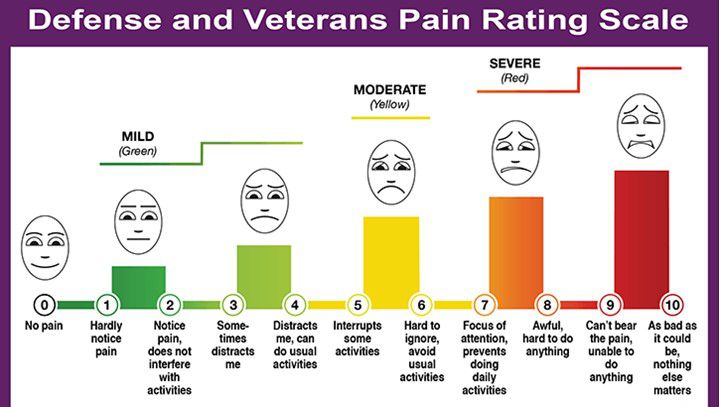
What Is the 1 to 10 Pain Scale?
What is the 1 to 10 pain scale refers to the Numerical Rating Scale (NRS), a standardized clinical assessment tool used by healthcare providers to measure a patient’s subjective pain intensity. Ranging from 0 (completely pain-free) to 10 (the most severe, agonizing pain imaginable), it helps clinicians evaluate symptom severity, track disease progression, and measure treatment efficacy.
The Numerical Rating Scale (NRS) for Pain
The Numerical Rating Scale helps patients describe how severe their pain feels on a scale of 0 to 10.
| Pain Score | Pain Level | Description |
|---|---|---|
| 0 | No Pain | No pain or discomfort. |
| 1–3 | Mild Pain | Noticeable pain with minimal impact on daily activities. |
| 4–6 | Moderate Pain | Pain that interferes with daily activities. |
| 7–10 | Severe Pain | Intense pain that may prevent normal daily functioning. |
According to clinical research and guidelines supported by the International Association for the Study of Pain (IASP) and the Indian Society for the Study of Pain (ISSP), pain is inherently subjective. The 1 to 10 scale translates a patient’s emotional and physical perception into an objective numerical value that guides medical decision-making.
How Is Interventional Pain Management Different from Standard Care?
Understanding what is the 1 to 10 pain scale highlights why specialized interventional pain medicine provides a distinct advantage over routine pharmacological care and open surgery.
Standard Pharmacological Management
Routine medical care frequently relies on prescribing oral analgesics, non-steroidal anti-inflammatory drugs (NSAIDs), or muscle relaxants based solely on a high pain score. While oral pills can help dull acute symptoms temporarily, taking them continuously does not repair damaged tissue or resolve compressed spinal nerves. Furthermore, oral pain relievers circulate systemically throughout the entire body rather than concentrating directly where joint friction or nerve irritation occurs, carrying risks of stomach ulcers, acidity, and kidney strain over time.
Traditional Surgical Operations
When a patient consistently rates their pain at an 8/10 or 9/10, they are sometimes advised that major open surgical operations—such as spinal fusion or total joint replacement—are their only remaining option. While open surgery is critical for severe progressive structural collapse or spinal cord compression, major operations involve general anesthesia, structural tissue disruption, hospital stays, and lengthy recovery timelines.
The Interventional Specialty Approach
An interventional pain doctor uses your pain scale rating as a baseline while employing dynamic, high-resolution imaging—such as musculoskeletal ultrasound and live C-arm fluoroscopy—to identify the exact anatomical structure causing your symptoms. By delivering targeted anti-inflammatory agents, autologous Platelet-Rich Plasma (PRP), or radiofrequency thermal energy directly to hyperactive nerves or joint capsules, interventional specialists provide effective, non-surgical pain relief that lowers your pain score without open surgery or extended procedural downtime.
How an Image-Guided Interventional Diagnostic Workflow Works
When your pain score remains elevated despite rest and basic oral medications, interventional pain specialists use a structured, safety-first clinical workflow to pinpoint and treat the exact source of tissue irritation.
1.Step 1: Clinical Mapping & Functional Assessment: Evaluating pain scores, physical mobility, and diagnostic scans.
A comprehensive evaluation maps your pain scores during rest and movement. High-resolution MRI, CT, or musculoskeletal ultrasound scans are reviewed to correlate your reported pain scale rating with structural tissue findings.
2.Step 2: Patient Positioning & Local Anesthesia: Ensuring complete patient comfort in an outpatient suite.
The patient rests comfortably in a specialized outpatient day-care suite. The skin over the targeted anatomical area is thoroughly sterilized, and a local numbing agent is applied to ensure procedural comfort.
3.Step 3: Real-Time Precision Image Guidance: Sub-millimeter needle tracking under continuous live imaging.
Using continuous live fluoroscopy (C-arm X-ray) or high-definition ultrasound, the specialist guides a fine needle directly toward the targeted nerve sheath, facet joint capsule, or epidural space while avoiding blood vessels.
4.Step 4: Targeted Therapeutic Delivery or Radiofrequency Ablation: Calming localized tissue inflammation or desensitizing nerve pathways.
A diagnostic contrast dye verifies needle location before delivering targeted anti-inflammatory agents, concentrated autologous PRP, or thermal radiofrequency energy directly to quiet hyperactive pain signals.
5.Step 5: Post-Procedure Re-Evaluation & Functional Rehabilitation: Monitoring pain score reduction and providing a rehabilitation plan.
Following a brief 20-to-30-minute observation period, the patient’s pain score is reassessed to verify immediate relief. The patient returns home the same day with a guided physical therapy plan to rebuild strength.
Clinical Breakdown of the 1 to 10 Pain Scale
Evaluating what is the 1 to 10 pain scale involves understanding how medical professionals categorize different numerical ranges based on functional impact:
Detailed Pain Level Matrix
| Pain Score Range | Clinical Classification | Functional Description | Typical Clinical Examples |
| 0 | Pain-Free | Complete absence of pain; normal physical function | Healthy state |
| 1 – 3 | Mild Pain | Noticeable discomfort that is easily ignored; does not interfere with daily activities or sleep | Minor muscle strain, mild stiffness, early friction |
| 4 – 6 | Moderate Pain | Clear, persistent pain that interferes with concentration, work duties, or physical movement | Herniated disc, knee osteoarthritis, cervicogenic headache |
| 7 – 8 | Severe Pain | Intense, disabling pain that dominates awareness and severely restricts basic physical movement | Acute sciatica, severe neuralgia, advanced joint breakdown |
| 9 – 10 | Unbearable Pain | Agonizing, overwhelming pain causing physical distress, inability to converse, or loss of mobility | Complex Regional Pain Syndrome (CRPS), acute renal colic |

Who Is Suitable for Interventional Pain Treatments?
Recognizing your candidacy early helps you access modern non-surgical care before chronic pain leads to nerve sensitization or secondary muscle atrophy.
You May Be a Candidate If:
- Your daily pain scale score consistently ranges between 4/10 and 8/10 despite rest and conservative care.
- Pain restricts your ability to perform routine work, walk comfortably, sit at a desk, or enjoy restful sleep.
- Oral painkillers cause stomach upset, acid reflux, elevated blood pressure, or mental fog.
- You wish to delay or avoid major open surgery through targeted non-surgical procedures.
- Routine rest, massage, and general physical therapy have provided incomplete or short-term symptom relief.
What to Expect: Before, During, and After Treatment
Knowing what occurs during an image-guided outpatient procedure helps reduce anxiety and prepares you for a comfortable recovery.
Before the Procedure
Your specialist will review your full medical history, evaluate your pain scale ratings across different physical activities, and analyze your diagnostic imaging scans. You will receive clear guidance regarding pre-procedure preparations and temporary adjustments to any blood-thinning medications if necessary.
During the Procedure
- Outpatient Comfort: Procedures take place in a clean day-care setting, usually taking only 15 to 30 minutes from start to finish.
- Minimal Discomfort: Local anesthesia numbs the skin and superficial tissue pathways, making needle advancement well tolerated.
- Live Precision Guidance: Continuous ultrasound or fluoroscopy keeps needle guidance exact and away from non-targeted structures.
After the Procedure
- Same-Day Return Home: You can safely return home shortly after a brief recovery observation period.
- Rapid Pain Scale Reduction: Many patients experience a significant drop in their pain score within hours or days following targeted treatment.
- Targeted Rehabilitation: Guided physical exercises begin shortly after to strengthen surrounding stabilizing muscles and maintain long-term functional recovery.
When Should You Consider Seeing an Interventional Pain Specialist in Hyderabad?
If you have been managing chronic pain for more than 6 weeks with limited relief from medication or physiotherapy, a consultation with a fellowship-trained interventional pain specialist is the logical next step. Dr. P. Purohithi at Apollo Hospital, Kondapur, Hyderabad, specialises in precisely diagnosing and treating the source of your pain using image-guided, minimally invasive techniques — without defaulting to surgery.
Holding prestigious international credentials including FIPM (Fellowship in Interventional Pain Management) and IDRA (International Diploma in Regional Anesthesia), Dr. Purohithi serves as the lead specialist at Meraki Pain Management Center. By combining precise diagnostic evaluations with live fluoroscopic and ultrasound guidance for radiofrequency ablation, nerve blocks, epidural steroid injections, and regenerative PRP therapy, Dr. Purohithi creates individualized treatment plans tailored to lower your pain score and restore your daily mobility.
When seeking a trusted pain clinic Hyderabad residents rely on, receiving an accurate diagnostic evaluation is the first step toward lasting health.
Frequently Asked Questions
Is a pain score of 5/10 considered serious?
A 5/10 pain rating indicates moderate pain that actively interferes with your concentration, work, or daily movement. If a 5/10 pain score persists for longer than 4 weeks, it warrants evaluation by an interventional specialist.
Can pain scores change throughout the day?
Yes. Pain scores frequently fluctuate based on posture, activity, inflammation, and fatigue. For example, spinal pain may rate as a 3/10 while resting but spike to an 7/10 during prolonged sitting or walking.
Is radiofrequency ablation safe for managing high pain scores?
Yes. When performed by a fellowship-trained interventional pain doctor using live C-arm fluoroscopy or ultrasound guidance, radiofrequency ablation is a safe, outpatient procedure with a high safety profile.
How quickly can an interventional procedure reduce my pain scale rating?
Local anesthetics can reduce pain scores within minutes of an image-guided procedure. Long-acting therapeutic agents or radiofrequency ablation typically provide progressive relief over 2 to 14 days.
How do I know if I need a pain specialist Kondapur?
If your pain score remains above a 4/10 for longer than 4 weeks despite taking medications and resting, consulting an interventional pain specialist Kondapur can help identify non-surgical treatment options.
What is the difference between an orthopedic surgeon and an interventional pain doctor?
Orthopedic surgeons focus primarily on open surgical joint repairs and replacements under general anesthesia. An interventional pain management specialist Hyderabad focuses on non-surgical, image-guided procedures to relieve pain while preserving native joint and spine structures.
How do doctors evaluate pain in patients who cannot speak?
For non-verbal patients, clinicians use behavioral observation scales—such as the Wong-Baker FACES scale or FLACC scale—which assess facial expressions, body language, and crying.
How can I book a consultation with Dr. P. Purohithi at Meraki Pain Management Center?
You can schedule an evaluation with Dr. P. Purohithi at Meraki Pain Management Center, located within Apollo Hospital, Kondapur, Hyderabad, by calling +91 88856 23283 or booking online via the official clinic portal.

Reclaim Your Comfort and Lower Your Pain Scale Score
Living with high pain scores should not force you to choose between taking daily oral pills or undergoing major open surgery. Understanding what is the 1 to 10 pain scale opens the door to clear doctor-patient communication and safe, image-guided procedures designed to target the true anatomical source of your pain.
If you are seeking expert non-surgical pain treatment in Hyderabad, Dr. P. Purohithi at Meraki Pain Management Center (Apollo Hospital, Kondapur) offers a thorough diagnostic consultation before recommending any procedure.
Take control of your health and explore advanced non-surgical treatment options today.

Leave a Comment